
Motorcycle Lift Table Buying Guide for Shops
Motorcycle Lift Table Buying Guide for Shops
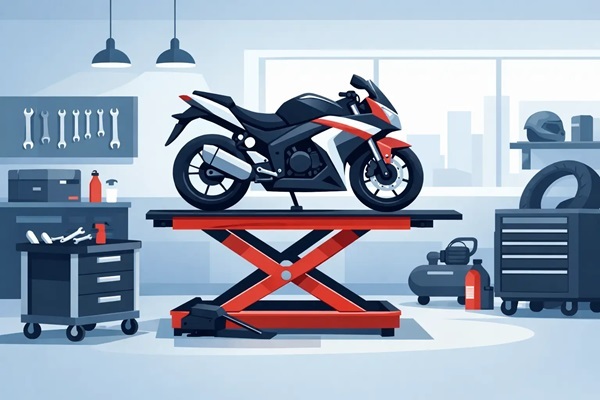
A motorcycle lift table is not just a way to get a bike off the floor. In a working service bay, it sets the pace for tire work, inspections, fluid services, accessory installs, and major repairs. The right table puts the chassis at a comfortable height, holds the motorcycle securely, and leaves room for the technician to work without constantly bending, kneeling, or repositioning the bike.
For a repair shop, dealership, powersports department, or serious home garage, the purchase comes down to more than the advertised lifting capacity. Deck dimensions, approach ramp length, wheel vise design, power source, accessories, floor space, and the kinds of motorcycles coming through the door all matter. A table that is technically strong enough can still become a poor fit if it slows loading, limits access, or takes up space needed for other revenue-producing equipment.
Start With the Motorcycle Lift Table Workload
Most standard cruiser, touring, sport bike, and dirt bike service can be handled by a 1,000-pound motorcycle lift table. That capacity gives a practical margin for the bike, removable accessories, tool trays, and the occasional heavier machine. For a shop that regularly sees large touring motorcycles, trikes, side-by-sides, ATVs, or specialty vehicles, step up to a higher-capacity table and confirm the deck width and loading configuration will actually support those vehicles.
Capacity is only one part of the decision. Consider what arrives at your shop in a typical week and what you want to service next year. A narrow pneumatic table may be ideal for routine motorcycle maintenance, while a wider table with side extensions can make a better long-term choice for a powersports operation serving trikes and ATVs. The wider unit costs more and uses more bay space, but it may eliminate the need for a separate piece of equipment.
Also look at the lift's lowest height. A low collapsed height makes loading easier, especially with heavy touring bikes. If a long approach ramp is not possible because of shop layout, a low-profile table becomes even more valuable.
Choose the Right Lift Drive System
Motorcycle tables are commonly available with air-powered, hydraulic, electric-hydraulic, or foot-pump lifting systems. The best choice depends on shop utilities, service volume, and budget.
Pneumatic-hydraulic tables are common in professional facilities because they are fast, dependable, and easy to operate when shop air is already available. Verify the manufacturer’s required air pressure and air consumption. An undersized compressor or a line shared with high-demand equipment can make the lift feel slow during busy periods.
Electric-hydraulic motorcycle lifts reduce dependence on compressed air and can be a practical fit where electrical service is more convenient than shop air. They generally offer controlled lifting and are well suited to consistent daily use. A basic manual or foot-pump table can work for a low-volume garage, but repeated pumping is not an efficient use of technician time in a commercial bay.
Regardless of drive system, the mechanical safety lock is the feature doing the holding while service is performed. The table should have clearly positioned lock stops, an easy release procedure, and a design that lets the technician lower the lift onto the lock rather than relying solely on hydraulic pressure.
Deck Size, Wheel Vises, and Access Matter
A bike can fit on a deck and still be difficult to service. Before selecting a table, compare usable deck length and width with the motorcycles you expect to handle. Long touring bikes need room for the front wheel, rear tire, and a technician moving around the machine. Wider decks improve stability and workspace, but they can make it harder to reach lower components from the side if the bike sits too far from the edge.
The wheel vise deserves close attention. A good front vise centers the tire, clamps securely, and releases without a fight. For routine service, a self-locking or manual front wheel vise is usually enough. Shops performing frequent wheel, fork, or suspension work may benefit from a vise arrangement that holds the motorcycle securely while allowing better front-end access.
A removable rear deck section is a major productivity feature for tire and wheel work. With the rear drop-out panel removed, the technician can access the rear wheel without trying to balance the bike or work around a full deck. Front drop-out sections serve a similar purpose for front-wheel service. These features add cost, but they quickly make sense in a shop billing regular motorcycle tire work.
Useful accessories for a working bay
The most useful accessories are the ones that reduce handling time or expand the vehicles the lift can service. Consider a table package with:
- A front wheel vise sized for the tires you commonly service
- A rear drop-out panel for wheel and tire removal
- Side extensions for trikes, ATVs, and wider powersports equipment
- A rolling jack for lifting the front or rear of the motorcycle off the deck
- Tie-down points or secure anchor locations for stabilization
Do not assume accessories are universal. Check compatibility by lift model, deck width, capacity, and mounting design before ordering.
Plan the Bay Before the Lift Arrives
The footprint on a spec sheet is only the parked size of the lift. You also need clear space for the approach ramp, the technician, tool carts, doors, and the motorcycle itself. A long table can occupy a surprising amount of floor when the ramp is down. In a tight shop, map the lift on the floor with tape before committing to a location.
Think about workflow. If the table is used for quick inspections and oil changes, position it where bikes can enter and exit without moving other vehicles. If it will support engine, suspension, and electrical jobs, allow enough clearance for a jack, parts cart, diagnostic equipment, and access on both sides. Avoid placing the lift where a raised motorcycle blocks an aisle, emergency exit, or access to other equipment.
Floor requirements also need attention. Many motorcycle lift tables are not anchored in the same way as a two-post vehicle lift, but they still need a level, sound concrete surface. Review the manufacturer’s installation instructions for floor condition, required clearances, electrical needs, compressed-air connections, and any anchoring or assembly requirements. A table that rocks, sits on an uneven slab, or has a ramp that cannot rest flat is a safety issue waiting to happen.
Safety Features Are Buying Features
A low price is not a complete value calculation when technicians will work under, around, and above a raised motorcycle every day. Look for solid construction, stable scissor geometry, positive mechanical locks, protected hydraulic components, a dependable wheel restraint, and controls that are easy to operate without putting hands or feet in a pinch area.
Loading procedures matter just as much as equipment design. The motorcycle should be centered on the ramp, moved slowly onto the deck, secured in the wheel vise, and stabilized with appropriate tie-downs when the job calls for them. The table should be raised evenly, set on its mechanical safety lock, and checked before service begins. A wheel vise is not a substitute for using good judgment with an unstable load, a damaged tire, or an unusually tall motorcycle.
Train every technician on the same loading and locking process. The best motorcycle table can still be misused when a shop treats it as simple furniture instead of powered service equipment.
Buy for Billable Work, Not Just Today’s Budget
A motorcycle lift table earns its place when it reduces labor time and lets the shop take on work it might otherwise avoid. Estimate how often technicians currently work on the floor, how much time is lost setting up jacks and stands, and whether tire, suspension, and accessory jobs are being turned away because the process is too inconvenient.
For a home garage, the calculation may be comfort, safety, and the ability to complete better work. For a commercial operation, it is usually bay utilization and technician efficiency. The least expensive unit may fit a light-duty need, but a better deck, drop-out panel, quality vise, and proper lifting system are often the difference between equipment that gets used daily and equipment that becomes a storage platform.
Match the table to the vehicles, utilities, floor plan, and service mix you actually have. If those details are unclear, work through them before ordering. MyToolEquipmentGuy.com has served the industry since 1984, and selecting equipment around real bay conditions is usually the fastest path to a table that pays for itself in productive work.
Recent Posts
-
Motorcycle Lift Table Buying Guide for Shops
Motorcycle Lift Table Buying Guide for Shops A motorcycle lift table is not just a way to get a bik …1st Sep 2026 -
Choosing the Right Alignment Lift for Sale
Choosing the Right Alignment Lift for Sale A standard service lift gets vehicles in the air. An ali …31st Aug 2026 -
Four Post Lift Storage: What Your Garage Needs
Four Post Lift Storage: What Your Garage Needs August 30, 2026 A four post lift storage setup can …30th Aug 2026