

Practical Guide to Portable Vehicle Lifts
Practical Guide to Portable Vehicle Lifts
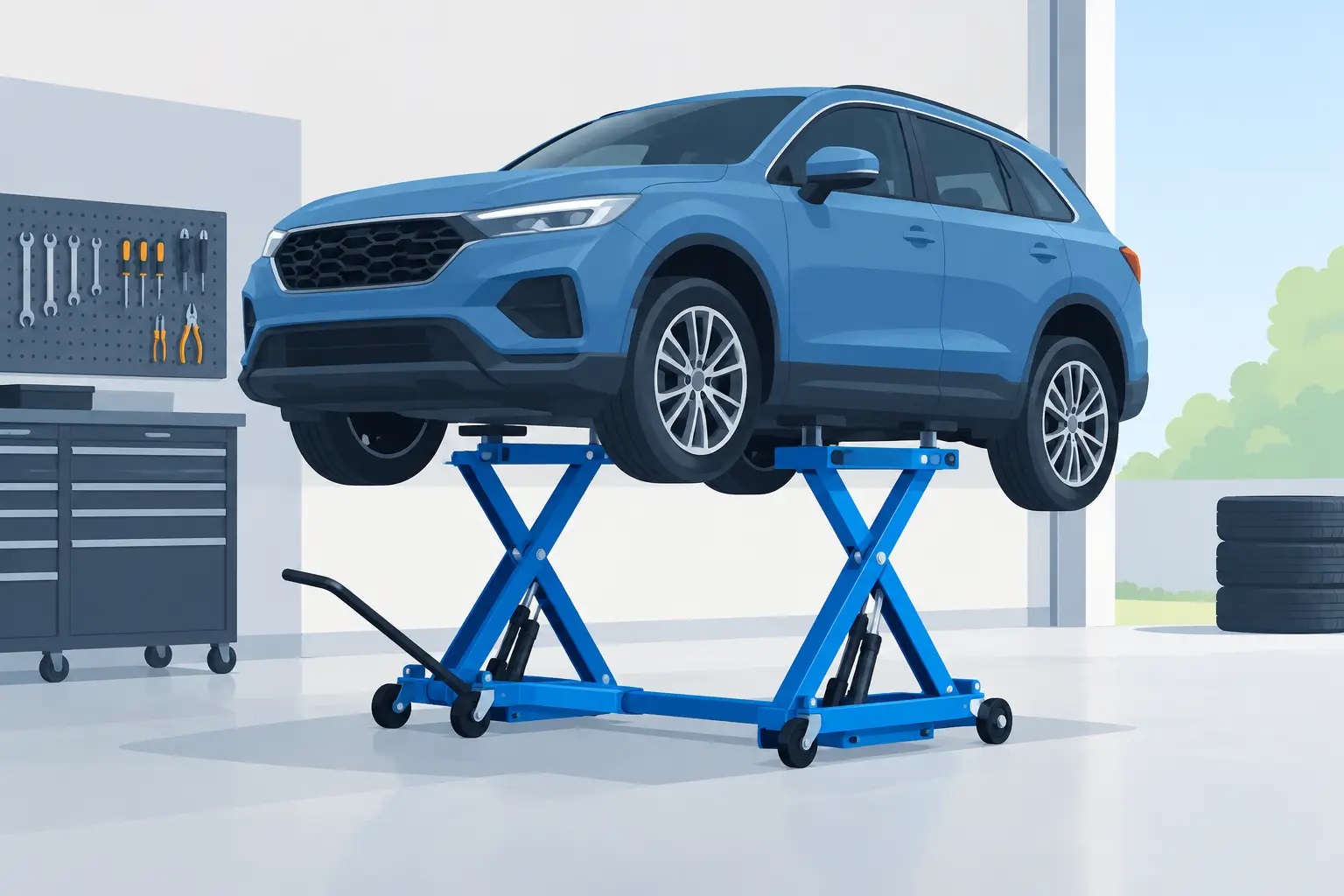
A lift that can move with the work can solve a real shop problem: an extra bay is needed today, but the floor plan may change next season. This guide to portable vehicle lifts covers what portable actually means, where these systems make sense, and what must be in place before a vehicle leaves the ground. The right unit can increase productive service capacity without committing to a permanent, full-size lift installation. The wrong unit can create a workflow bottleneck or, worse, a safety issue.
Portable lifts are not one product category. A low-rise portable scissor lift, a set of mobile column lifts, and a movable two-post-style system serve very different vehicles and repair procedures. Start with the jobs you intend to sell, not the idea that a lift needs to be easy to roll out of the way.
What Counts as a Portable Vehicle Lift?
In shop equipment, portable generally means the lift can be relocated within a facility or transported to another approved work location. It does not automatically mean it can be used on any slab, outdoors, or without electrical planning. Many portable units still require a level, sound concrete surface and operating clearance around the vehicle.
Low-rise scissor lifts are a common choice for tire service, brakes, suspension work, detailing, and general inspection. They sit low when lowered, which helps in low-ceiling buildings and home garages where a conventional two-post lift is not practical. Their limitation is access. The platforms or frames occupy space beneath the vehicle, so transmission, exhaust, and centerline work can be less convenient than it is on a two-post lift.
Mobile column lifts work differently. A set of synchronized columns lifts a vehicle by its wheels, typically using wheel forks. They are widely used by fleet operations, municipalities, school bus garages, and truck service departments because the columns can be rolled to the vehicle rather than driving every vehicle into a fixed bay. Depending on the model and number of columns, mobile columns can handle heavy trucks, buses, and specialty equipment.
Some compact lifting systems are designed primarily for quick-service work or storage flexibility. These can be useful for a serious home garage or a shop adding seasonal capacity, but they should not be mistaken for a replacement for every dedicated service lift. Portability is valuable only when it supports the way your technicians actually work.
Match Lift Type to the Work You Perform
A portable lift should earn its floor space through billable work. For a tire shop, a low-rise lift may keep technicians from relying on floor jacks for brake jobs, rotations, and undercar inspections. For a collision center, portable lifting can help stage vehicles for teardown or wheel and suspension repairs without tying up a structural repair area.
For fleets, mobile columns often make the strongest case. They allow a maintenance team to lift multiple axle configurations, move equipment between bays, and work around vehicles that are too large for a conventional fixed lift. They also make sense where the building is leased, expansion plans are uncertain, or the service area must be reconfigured regularly.
Home users tend to focus on storage and access, but the same trade-offs apply. A low-rise unit can make wheel, brake, and detailing work much easier while fitting under a lower ceiling. If you need full standing access beneath a vehicle for major restoration work, a portable low-rise design may feel restrictive. A properly installed two-post or four-post lift may be the better long-term answer if the building supports it.
Capacity Is More Than the Vehicle's Curb Weight
Capacity is the first specification most buyers see, and it is the one most often oversimplified. Do not select a lift by matching its rating to the curb weight of a single vehicle. Consider the heaviest vehicle you expect to service, typical cargo or upfitting, axle distribution, and the equipment that will remain on the vehicle during service.
A pickup equipped with utility bodies, toolboxes, service bodies, or loaded racks can weigh substantially more than its base model. EVs bring another consideration: battery packs can add major weight and change how the load is distributed. Fleet buyers should plan for the next vehicle cycle, not only the vehicles currently parked outside.
For mobile column lifts, capacity can be stated per column and as a total system rating. The number of columns, their synchronization method, and the approved lifting configuration all matter. Four columns may be appropriate for one vehicle, while six or more may be required for a longer or heavier chassis. Never assume that adding columns informally increases capacity beyond the manufacturer-approved configuration.
Capacity also does not override lifting-point requirements. Use the lift exactly as specified by its manufacturer and follow the vehicle maker's approved lift points. A lift can have sufficient rated capacity and still be used incorrectly if the vehicle is positioned poorly or the contact points are not secure.
Floor, Power, and Clearance Decide Whether It Will Work
Portable equipment reduces installation complexity, but it does not eliminate site requirements. The floor must be level enough for stable lifting, strong enough for the equipment and vehicle load, and free of conditions that interfere with safe positioning. Cracked concrete, unverified slab thickness, major slope, drainage channels, floor joints, and uneven patches all deserve attention before purchase.
Do not rely on a generic concrete thickness rule. Requirements vary by lift design, capacity, manufacturer instructions, and local conditions. A portable scissor lift may have different floor needs than a high-capacity mobile column system. If the slab is questionable, have it evaluated before delivery rather than after equipment arrives.
Ceiling height matters even with low-rise units. Consider the vehicle's lift height, the height of open hoods or rear doors, overhead lighting, heaters, sprinkler lines, fans, and garage-door tracks. For mobile columns, also plan the space required to roll columns into position and to walk safely around the raised vehicle.
Power requirements deserve the same attention. Some portable systems use standard single-phase power, some require 220-240V service, and many mobile column designs use rechargeable battery power. Battery operation can improve mobility, but it adds a charging routine to the shop's operating procedure. Confirm voltage, phase, plug type, charging location, and any electrical work before ordering.
Safety Features Are Part of the Purchase Decision
A portable lift should be evaluated as a safety system, not just a piece of material-handling equipment. Look for positive mechanical locking systems, clear lock engagement procedures, stable lifting geometry, accessible controls, and documented operating instructions. For commercial use, shops should also consider third-party certification where applicable and verify that the equipment is suitable for their intended use.
Technician training matters as much as the equipment specification. The operator needs to inspect the lift, verify vehicle weight and positioning, raise the vehicle slowly for an initial stability check, and engage the mechanical locks before working beneath it. Nobody should work under a vehicle supported only by hydraulic pressure.
A practical pre-use inspection should cover these five areas:
- Hydraulic hoses, fittings, cylinders, cables, and electrical connections for leaks, damage, or wear.
- Locks, latches, and synchronization components for proper engagement and operation.
- Wheels, casters, forks, pads, platforms, and adapters for damage or missing hardware.
- Battery charge level and charging equipment on battery-powered systems.
- The work area for debris, slope, oil, poor lighting, and people inside the operating zone.
Keep inspection records in a commercial facility and remove damaged equipment from service until it is repaired. A portable lift gets moved more often than a fixed lift, which means it is exposed to more chances for impact damage, improper storage, and rushed setup.
Plan for Workflow, Not Just Mobility
Before buying, map the route from the storage area to the service position. Can the unit move through doors? Will it cross expansion joints, drains, or ramps? Does it need to share a bay with alignment equipment, tire machines, or other high-traffic work? A lift that is technically portable but difficult to deploy will spend too much time parked.
Also consider accessories and service support. Wheel adapters, frame-contact pads, lifting blocks, column sets, remote controls, and battery components can determine whether a lift is ready for the vehicles you see every day. Ask about replacement parts, warranty coverage, training materials, freight delivery, and whether unloading equipment is needed at your location.
For a new shop, portable lifting can be a smart first investment while revenue builds and the facility layout proves itself. For an established shop, it can be the fastest way to add flexible capacity around seasonal tire work, fleet contracts, or overflow repairs. MyToolEquipmentGuy.com can help buyers compare lift categories, capacities, site needs, and the equipment required to put a complete bay to work.
Buy the portable lift that fits your vehicles, floor, technicians, and service mix on an ordinary busy Tuesday. That is the test that turns mobility into productive capacity.
Recent Posts
-

Practical Guide to Portable Vehicle Lifts
Practical Guide to Portable Vehicle Lifts A lift that can move with the work can solve a real shop …27th Oct 2026 -

Wheel Alignment Equipment Guide for Busy Shops
Wheel Alignment Equipment Guide for Busy Shops A wheel alignment system can either keep vehicles m …25th Oct 2026 -
Electric Vehicle Lifts: What Shops Need to Know
Electric Vehicle Lifts: What Shops Need to Know An EV may look like a routine lift job until the te …21st Oct 2026