

Paint Booth Buying Guide for Collision Shops
Paint Booth Buying Guide for Collision Shops
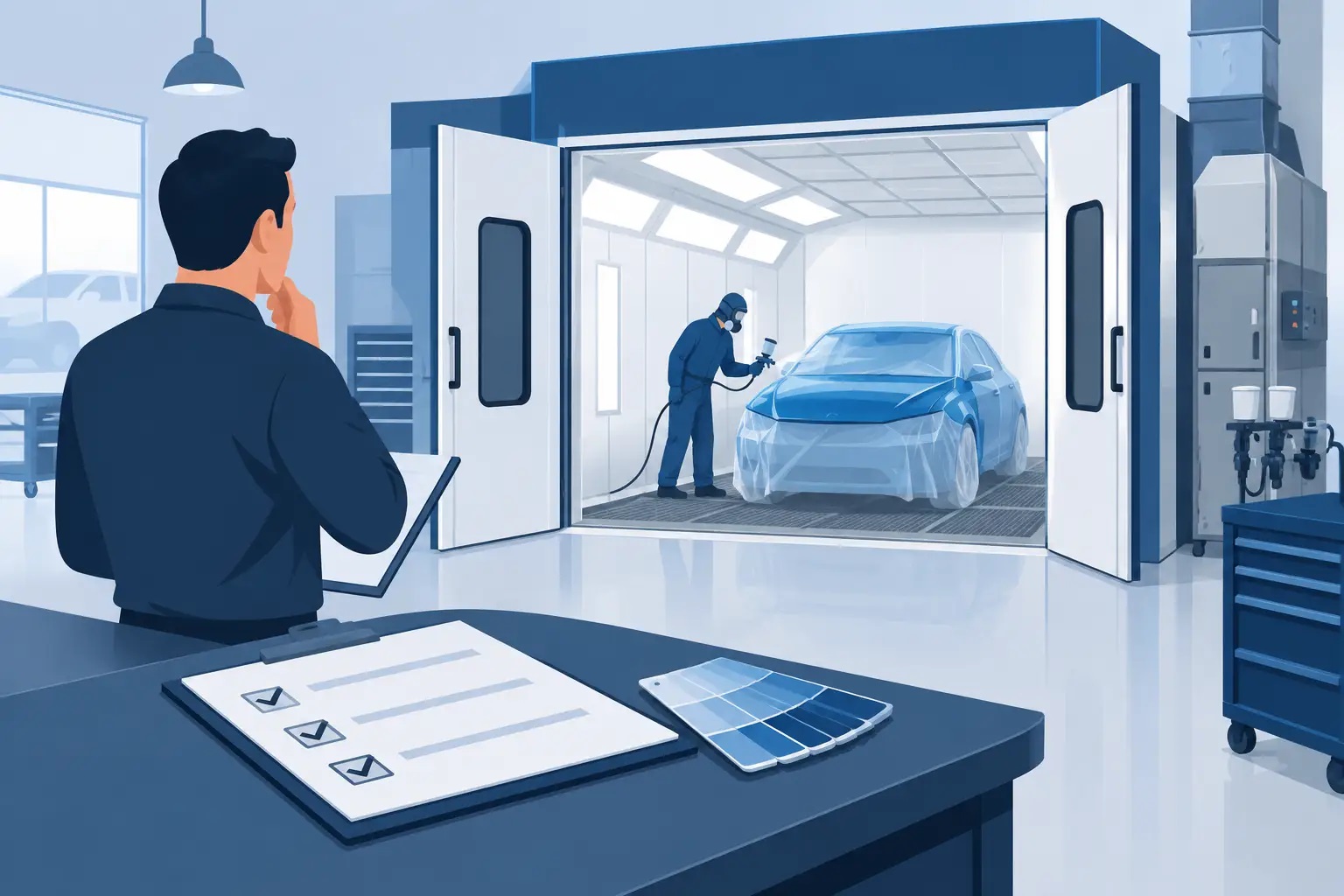
A paint department can be the production bottleneck or the part of the shop that keeps jobs moving. The difference often comes down to selecting a Paint Booth that matches actual repair volume, building limitations, coating requirements, and available utility capacity. A booth that looks like a bargain on the quote can become expensive when it requires major electrical upgrades, a new gas service, extra ductwork, or a pit that was never included in the plan.
For a collision shop owner, this is not simply a question of booth dimensions. The right system has to produce consistent finishes, control contamination, support safe working conditions, and fit into the shop’s cycle time. Before comparing brands, options, and prices, start with the work the booth will handle every week.
Start With Your Production Mix
A shop repairing late-model passenger vehicles has different requirements than a commercial fleet operation refinishing box trucks, vans, or heavy equipment. Measure the longest, widest, and tallest vehicles you expect to spray, then add realistic clearance for doors, mirrors, technician movement, and equipment.
A standard automotive booth may suit a high-volume collision operation focused on cars and light trucks. A taller or extended-length configuration may be necessary for transit vans, dually pickups, work trucks, or specialty vehicles. Buying only for the average sedan can limit the jobs you accept later.
Throughput matters just as much as physical size. If the booth is occupied all day by prep work, masking, and cure time, adding more estimators or body technicians will not solve the delay. Consider how many refinish jobs move through the department per day, how long each stays in the booth, and whether a heated cure cycle would create enough additional capacity to justify the higher initial investment.
Paint Booth Airflow Determines Finish Quality
Airflow design is one of the main distinctions between booth types. It affects overspray removal, contaminant control, operator comfort, and how consistently a finish lays down.
Click here to access our Paint Booth link
Crossdraft Booths
A crossdraft booth pulls air horizontally across the vehicle, generally from filtered doors or an intake area at one end to an exhaust plenum at the other. This configuration can be a practical choice when budget and building layout are the primary constraints. It is commonly used in smaller facilities and can be easier to position where a full pit is not practical.
The trade-off is that air travels across the vehicle and work area before exiting. Proper filter maintenance, clean work practices, and sound spray technique matter even more. A crossdraft system can produce good work, but it is less forgiving when the shop is trying to maximize premium finish quality on a constant basis.
Semi-Downdraft Booths
Semi-downdraft designs bring filtered air from the ceiling toward the work area, then direct exhaust through the rear of the booth. They offer a step up in airflow control while avoiding some of the civil work associated with a full downdraft pit. For many independent collision shops, this is a sensible middle ground between price, installation complexity, and finish quality.
Downdraft Booths
A downdraft booth moves air vertically from a filtered ceiling into a floor-level exhaust system. This design keeps overspray moving down and away from the repair surface and technician, which makes it a preferred configuration for high-production collision centers and shops pursuing consistent, high-end results.
The advantage comes with planning requirements. Full downdraft installations may require a pit, raised steel basement, or a building arrangement that supports below-floor exhaust. Those details affect excavation, drainage, concrete work, structural engineering, and installation cost. Do not assume the booth price includes the full site scope.
Heat and Cure Options Affect Cycle Time
A non-heated booth may work for low-volume refinishing or facilities in mild climates, but it can slow production and make results more dependent on ambient conditions. Heated booths provide controlled spray and cure temperatures, helping coatings flash and cure more predictably.
For a busy collision center, bake capability can reduce booth occupancy per repair. That can be a major revenue factor, especially when the schedule is full and vehicles are waiting for refinish. The correct choice depends on coating systems, daily car count, labor availability, and local fuel costs. A heated booth has more components to maintain and consumes more energy, but the improved cycle time can outweigh those operating costs.
When reviewing a heated unit, confirm the burner arrangement, rated BTU output, control system, temperature range, insulation, and whether the quoted package includes the necessary combustion air and exhaust components. Also verify whether your site has adequate natural gas, propane, or electrical capacity before equipment arrives.
Facility Planning Comes Before Ordering
A booth is a building project as much as it is a piece of equipment. The building must accommodate more than the booth shell. Plan for intake and exhaust duct runs, roof penetrations, fan locations, make-up air equipment, service access, and clearance around the unit.
Electrical requirements should be reviewed early. Larger booth systems may require three-phase power, and a panel that is already loaded with welders, air compressors, lifts, and HVAC equipment may need an upgrade. Gas piping, fire suppression considerations, lighting circuits, and compressed-air routing should be reviewed as part of the same plan.
Concrete deserves close attention. A pitless or raised-basement booth may avoid excavation, but it changes vehicle entry height and ramp layout. A pit-style system may require engineering and significant concrete work. If the booth will be installed near vehicle lifts, frame equipment, or an alignment rack, make sure every slab cut and footing is planned together. Reworking concrete after installation is expensive and disruptive.
Local permitting and environmental requirements vary by jurisdiction. Your contractor, local authority having jurisdiction, fire marshal, and environmental agencies may each have requirements related to ventilation, emissions, fire protection, electrical work, and duct discharge. Confirm these items before selecting a configuration, not after the equipment is on the loading dock.
Filtration Is an Operating Cost, Not an Afterthought
Clean intake air and properly maintained exhaust filters are essential to booth performance. Dirty intake filters can restrict airflow and introduce contaminants. Loaded exhaust filters can reduce draw, affect spray quality, and create unnecessary strain on the ventilation system.
Build filter replacement into the operating budget from day one. The lowest-priced booth package is not automatically the lowest-cost system to run if it uses difficult-to-source filters or requires frequent changes. Ask about filter sizes, stages, availability, recommended replacement intervals, and access points for technicians.
Lighting is another daily-use item worth evaluating closely. Technicians need enough light to identify metallic orientation, coverage issues, color variation, and debris before the finish leaves the booth. Look at fixture placement, serviceability, lens design, and the amount of usable light at vehicle level, not just the number of fixtures in the specification sheet.
Choose Options That Solve Real Shop Problems
Paint booth options should support production, safety, and the kinds of vehicles you actually repair. Vehicle lifts inside or adjacent to the booth can improve access for some operations, but they must be planned around airflow, floor structure, and approved installation methods. Personnel doors, roll-up doors, drive-through layouts, control-panel placement, and access ramps all affect how easily technicians move vehicles through the department.
A prep station can be equally valuable when booth time is limited. Keeping sanding, masking, and staging work outside the spray enclosure allows the booth to remain dedicated to spraying and curing. In a busy operation, that workflow change can be more valuable than adding cosmetic options to the booth itself.
Do not overlook service access. Fans, motors, burners, control panels, filters, and lights all need routine attention. Equipment squeezed into a corner with no roof access or mechanical clearance will cost more to maintain over its life.
Buy the Booth as Part of a Complete Shop Plan
The best paint booth purchase starts with a clear layout, real production numbers, and a complete installation scope. Gather ceiling heights, building dimensions, door locations, utility details, vehicle mix, and anticipated daily volume before requesting a quote. Those facts help prevent under-sizing the system or paying for capability the shop will not use.
MyToolEquipmentGuy.com can help shop owners compare paint booth configurations alongside the lifts, air equipment, frame systems, and other major equipment that share the same facility and utility plan. For complex projects, a conversation before purchase is usually cheaper than a correction after installation.
A paint booth should earn its floor space every day. Choose the airflow, heat, size, and installation approach that keeps refinishing work moving without creating a facility problem you have to work around for the next decade.
Recent Posts
-
Frame Rack or Frame Straightener: Which Fits?
Frame Rack or Frame Straightener: Which Fits? A Frame Rack or Frame Straightener is not a small pu …30th Oct 2026 -
Paint Booth Buying Guide for Collision Shops
Paint Booth Buying Guide for Collision Shops A paint department can be the production bottleneck or …30th Oct 2026 -
Practical Guide to Portable Vehicle Lifts
Practical Guide to Portable Vehicle Lifts A lift that can move with the work can solve a real shop …27th Oct 2026