
Choosing a Commercial Wheel Balancer for Your Shop
Choosing a Commercial Wheel Balancer for Your Shop
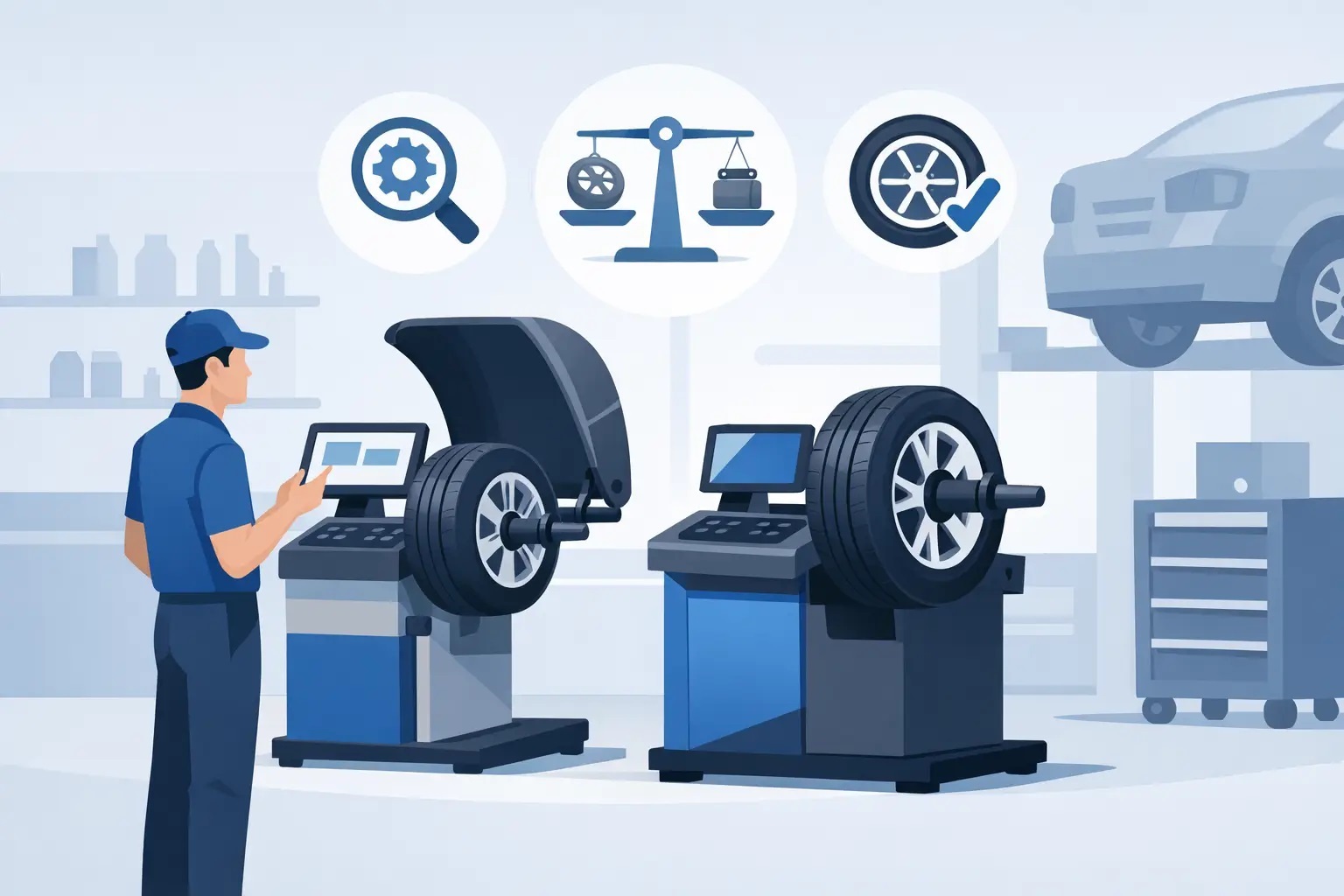
A comeback for vibration is not just an annoyance at the counter. It costs a technician another bay visit, ties up a lift, and can make a customer question work that was otherwise done correctly. The right commercial wheel balancer helps a shop deliver a smoother result the first time while keeping tire service moving during the busiest part of the day.
For a professional operation, a wheel balancer is not a generic accessory to a tire changer. It is a revenue-producing machine that needs to match your vehicle mix, wheel volume, technician workflow, and available service support. A small independent repair shop may prioritize compact footprint and simple operation. A tire store, dealership, or fleet operation may need faster cycles, more wheel data, and the ability to handle difficult assemblies without repeated correction spins.
What a Commercial Wheel Balancer Does Differently
A commercial-grade balancer is built for repeatable use on passenger vehicles, light trucks, and, depending on the model, larger truck, SUV, or specialty wheel assemblies. It measures where weight is needed to correct imbalance, then guides the technician through placement. The basic job sounds simple, but machine design has a direct effect on cycle time and finished quality.
Entry-level units can be a good fit for lower-volume shops handling conventional steel and alloy wheels. Higher-volume balancers typically add faster spin cycles, automatic data entry, more balancing programs, larger displays, laser or light-based weight placement assistance, and more durable clamping components. Those features are not just for convenience. They reduce input errors and help technicians balance modern wheel designs consistently.
The best choice depends on the work coming through your doors. If your shop sees mostly standard passenger tires, a straightforward digital balancer may be all you need. If you regularly service low-profile tires, large-diameter wheels, black adhesive weights, custom wheels, and light-truck assemblies, additional modes and wheel measurement features earn their keep quickly.
Choose a Commercial Wheel Balancer by Vehicle Mix
Start with the vehicles you service now, then account for the business you intend to pursue over the next several years. A balancer that is undersized for your actual wheel range will create delays, workarounds, and avoidable wear on the machine.
Check the manufacturer’s specifications for maximum wheel diameter, rim width, wheel weight, and shaft diameter. Do not assume a balancer advertised for passenger vehicles will comfortably accommodate every oversized wheel package that comes into a truck-heavy market. Larger assemblies require adequate hood clearance, a suitable wheel lift or assist device, and a shaft and cone system designed to center the wheel accurately.
Shops serving fleets should also look closely at the types of fleet vehicles involved. A light-duty delivery fleet is very different from a municipal operation servicing medium-duty trucks. For heavy commercial truck and bus wheels, use a dedicated truck wheel balancer rather than trying to force a passenger-car machine beyond its intended application.
Wheel construction matters as much as size. Alloy wheels often need adhesive weights hidden behind spokes, while steel wheels may use clip-on weights. If appearance-sensitive balancing is common in your shop, choose a unit with ALU modes and split-weight or hidden-weight programs. These functions let the technician place weight behind spokes while maintaining the correction the balancer calls for.
Match the Machine to Your Daily Volume
Volume determines how much speed and automation matter. A shop balancing a handful of wheels each day can work productively with manual distance and diameter entry. A busy tire lane benefits from automatic gauge arms that capture wheel dimensions when the technician positions the arm at the rim.
Automatic data entry reduces keystrokes, but it also reduces the chance that a rushed technician enters the wrong rim width or diameter. That matters on a Saturday morning when several tire jobs are waiting and every bay is occupied.
For consistently high wheel volume, look at cycle time, startup behavior, brake function, display visibility, and the ergonomics of the hood. A pedal-operated hood or automatic stop position may save only seconds on each wheel, but those seconds add up across dozens of jobs. The trade-off is a higher initial equipment cost and more components to maintain, so buy automation that fits your actual throughput rather than features that will go unused.
Balancing Modes That Matter in a Working Shop
Most professional balancers provide multiple programs for different rim and weight styles. The terminology varies by manufacturer, but the core functions are similar. Dynamic balancing corrects imbalance in two planes and is the standard choice for most modern wheels. Static balancing corrects a single plane and is often appropriate for narrower wheels or specific applications.
ALU programs are especially valuable for alloy wheels because they allow adhesive weights to be placed at different locations inside the rim. A split-weight or spoke-matching program is useful when customers expect no visible wheel weights on a premium finish. The machine calculates equivalent placement positions behind spokes, preserving wheel appearance without sacrificing balance quality.
Some advanced units offer road-force measurement or diagnostic functions. These systems can identify tire and wheel assembly issues that a standard balance alone will not solve, such as excessive radial force variation. They are valuable in shops that handle persistent vibration complaints, high-performance vehicles, and warranty-sensitive dealership work. They also require a larger capital investment and trained operators. For many general service shops, a quality standard balancer paired with disciplined mounting and tire inspection will be the better value.
Accurate Mounting Is as Important as the Balancer
Even the best machine cannot compensate for a wheel that is mounted off-center. Cones, collets, quick nuts, and flange plates are working tools, not accessories that should remain in a cabinet.
The most common mounting method uses a cone to center the wheel on the balancer shaft. It works well for many applications, provided the correct cone is selected and the wheel is clean at the mounting surface. However, some alloy wheels, reverse-mount wheels, and wheels with worn or unusual center bores benefit from a flange plate or pin plate system that locates the wheel by the lug holes.
A shop that services a broad mix of vehicles should budget for an accessory package from the beginning. Consider the wheels that create the most trouble in your operation: large center bores, small center bores, closed-center wheels, light-truck wheels, and aftermarket designs. The right adapter prevents repeat spins and reduces the temptation to make an inaccurate setup work.
Keep cones and clamping hardware clean and protected from damage. A nicked cone or contaminated shaft can create false readings that look like a balancing problem. Before blaming the machine, inspect the wheel, remove debris from the mounting surfaces, verify the correct adapter, and perform the manufacturer’s recommended calibration check.
Floor Space, Power, and Shop Layout
A wheel balancer needs more than a place to sit. Plan enough clearance for the hood to open, technicians to load wheels safely, and carts or tire changers to move through the area without creating a bottleneck. Positioning the balancer close to the tire changer usually improves workflow, but leave room for the operator to move safely around both machines.
Most passenger and light-truck balancers operate on standard shop electrical service, but always confirm voltage, phase, plug requirements, and any dedicated circuit recommendations before delivery. Do not treat electrical details as an afterthought. Equipment arriving without the correct outlet or circuit can delay installation and put a new tire service area behind schedule.
For larger wheel assemblies, consider handling equipment. A wheel lift, assist arm, or nearby rolling equipment can reduce strain on technicians and protect the balancer shaft from hard impacts. This is particularly relevant for truck tires, oversized aftermarket assemblies, and fleet work where wheel weight is part of the daily routine.
Evaluate Service Support Before You Buy
Price matters, but downtime costs more than the difference between two similar machines. Compare warranty coverage, parts availability, technical support, and whether local or nationwide service resources are available for the brand you select. Ask how calibration is handled, what common wear items cost, and whether replacement cones, shafts, display components, and circuit boards can be obtained without a long delay.
Buyers should also consider training. A balancer with advanced modes is only profitable when technicians know when and how to use them. Have the supplier explain the setup process, routine calibration, hidden-weight programs, and proper wheel mounting. A short training session can prevent a long run of avoidable comebacks.
When planning a complete tire service area, coordinate the balancer with the tire changer, air supply, wheel handling equipment, and nearby vehicle lift capacity. MyToolEquipmentGuy.com can help buyers compare equipment categories and build a package around the vehicles, space, and volume their shop actually handles.
A commercial wheel balancer should make accurate work easier, not ask technicians to compensate for equipment limitations. Choose for the wheels you service most often, leave room for profitable growth, and keep proper adapters and calibration practices in the daily routine. That is how a tire service department stays productive when the bays are full.
Recent Posts
-
Choosing a Commercial Wheel Balancer for Your Shop
Choosing a Commercial Wheel Balancer for Your Shop A comeback for vibration is not just an annoyanc …3rd Sep 2026 -
Tire Changer Machine Buying Guide for Shops
Tire Changer Machine Buying Guide for Shops A motorcycle lift table is not just a way to get a bike …2nd Sep 2026 -
Motorcycle Lift Table Buying Guide for Shops
Motorcycle Lift Table Buying Guide for Shops A motorcycle lift table is not just a way to get a bik …1st Sep 2026