
Car Lifts: Choosing the Right Type for Your Shop
Car Lifts: Choosing the Right Type for Your Shop
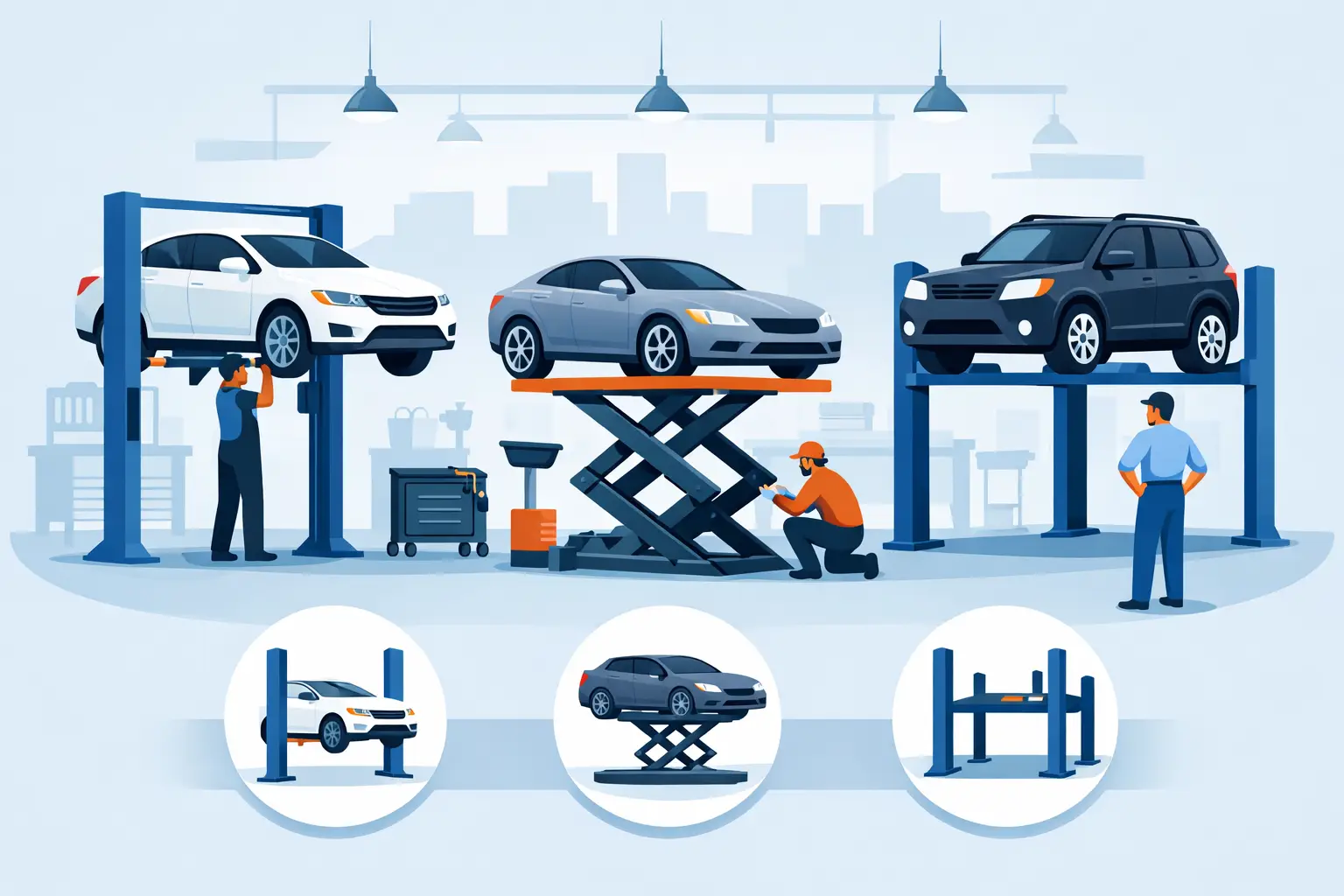
A lift bay that is too slow, too limited, or poorly matched to the vehicles coming through the door costs money every day. The right car lifts put technicians at a workable height, open up faster inspections, and make undercar service less punishing. The wrong lift can restrict the jobs you accept, create installation headaches, or occupy valuable square footage without producing enough billable work.
For a repair shop, dealership, fleet facility, or serious home garage, lift selection starts with the work - not with the lowest advertised price or a single capacity number. Vehicle mix, ceiling height, concrete, bay traffic, technician preference, and future expansion all matter. A lift is long-term infrastructure, so it needs to fit the operation you are building, not just the first vehicle you plan to raise.
Start With the Work the Lift Must Handle
Think through the jobs that will happen in the bay most often. A general repair shop doing brakes, suspension, steering, tires, and exhaust usually benefits from the open access of a two-post lift. A lube-focused facility may prioritize drive-on access and fast vehicle positioning. An alignment bay needs a purpose-built alignment lift with turn plates, slip plates, and the right runway configuration. A collector who needs extra vehicle storage has different priorities than a fleet shop servicing loaded trucks.
Your heaviest vehicle is one consideration, but it is not the whole decision. Look at wheelbase range, track width, low ground clearance, pickup truck lift points, and whether vehicles arrive with cargo or aftermarket accessories. A bay that sees half-ton pickups today may see electric trucks, long-wheelbase vans, or heavier fleet units tomorrow. Buying only for the current average vehicle can become an expensive limitation.
Also consider how work flows through the building. If every vehicle must pass through one narrow doorway or technicians share a single alignment rack, the lift becomes a scheduling tool as much as a service tool. A well-chosen setup reduces waiting between inspection, estimate approval, repair, and final quality check.
Compare the Main Types of Car Lifts
Two-Post Lifts
Two-post lifts are the standard choice for full-service repair because they provide clear access to wheels, suspension, brakes, driveline components, and much of the undercarriage. Symmetric models position the vehicle more evenly between the columns, while asymmetric models place the vehicle farther back to improve door opening clearance and technician access.
Capacity commonly ranges from about 9,000 to 18,000 pounds, with heavier configurations available for commercial use. A 10,000-pound lift is a popular all-around rating for many automotive shops, but the right choice depends on the trucks and vans you service. Pay attention to arm design, pad height, overall width, column height, and whether a clear-floor or floor-plate design better fits your bay.
Clear-floor two-post lifts keep the area between columns open, which is useful for rolling jacks, transmission equipment, and general movement under the vehicle. Floor-plate models route equalization components across the floor and can be a practical answer for lower-ceiling buildings. Neither design is automatically better. Building dimensions and service needs decide it.
Four-Post Lifts
Four-post lifts support the vehicle by its tires on runways. They are common for alignment, inspections, storage, and situations where a technician needs fast drive-on loading. They are also a strong choice for vehicles with difficult lifting points, low clearance, or specialty configurations.
For repair work, a four-post lift often needs rolling jacks to raise the wheels off the runways for tire, brake, and suspension service. That adds cost, but it also expands what the rack can do. Alignment-capable models require the proper runway equipment and sufficient length for the vehicles being aligned. Do not assume any four-post lift can become an alignment rack with a few accessories.
For residential storage, a four-post lift can double available parking space without the same frequent anchoring requirements as many commercial installations. That said, storage customers should still verify ceiling height, vehicle height, ramp clearance, and the total loaded height of the upper vehicle.
Scissor Lifts and Low-Rise Lifts
Scissor lifts fit where floor space, ceiling height, or a clean bay layout is the priority. Low-rise models work well for tires, brakes, detailing, and quick service. Mid-rise and full-rise scissor lifts can support broader undercar work while keeping posts out of the way.
The trade-off is access. Scissor mechanisms occupy space beneath the vehicle, and some configurations limit access to certain underbody components. For a tire shop or a compact service bay, that may be an acceptable compromise. For a technician who spends every day on transmissions, exhaust, or major suspension repairs, a two-post lift may be more productive.
Specialty, Heavy-Duty, and Parking Lifts
Motorcycle lifts, in-ground lifts, truck lifts, mobile column lifts, parking systems, and heavy-duty runway lifts solve more specific problems. A heavy-duty shop may need 30,000-, 40,000-, or 60,000-pound capacity, while bus and municipal fleet operations can require systems rated as high as 99,000 pounds. These purchases require detailed planning around axle loads, vehicle dimensions, electrical service, floor design, and technician workflow.
Specialty equipment should be selected by application first. A high capacity rating does not make a lift suitable for every truck, bus, RV, or specialty vehicle. Runway width, lift length, wheelbase coverage, wheelbase adapters, and approach ramps all need to match the equipment you actually service.
Capacity Is More Than a Number on the Decal
Lift capacity should comfortably exceed the real operating weight of the vehicles going into the bay. Use gross vehicle weight rating when appropriate, especially for fleet work, loaded service bodies, cargo vans, and commercial trucks. Accessories add weight too: toolboxes, ladder racks, upfit bodies, batteries, fuel, and cargo can change the equation.
Capacity also needs to be considered alongside lifting geometry. Proper arm reach and correct pad placement are essential on a two-post lift. A vehicle may weigh less than the lift rating but still require a different arm package or adapter setup because of its lift points. For drive-on lifts, verify runway width and length against the smallest and largest vehicles you expect to handle.
Do not treat capacity headroom as wasted money. If your shop is expanding into heavier pickups, EVs, fleet contracts, or commercial work, the additional capacity can protect the investment and prevent a premature replacement.
Measure the Building Before Ordering Car Lifts
A lift that looks right on a product page can fail at installation if the building has not been measured correctly. Start with clear ceiling height, not just the height listed in building plans. Account for lights, sprinkler piping, HVAC runs, garage door tracks, beams, and anything else above the bay.
Concrete is equally important. Most anchored lifts have specific slab thickness, compressive strength, curing, and anchoring requirements. Existing concrete may look sound but still be unsuitable because of thickness, cracks, age, reinforcement conditions, or unknown construction. Never guess. Review the lift manufacturer's installation requirements and have the slab evaluated when there is any question.
Electrical service matters as well. Many lifts use single-phase power, but voltage and amperage requirements vary by model. Heavy-duty and commercial systems may have different power requirements. Plan the location of disconnects, air supply if needed, and technician travel paths before the lift arrives.
Measure bay width and door clearance with vehicles in mind. A lift may fit physically while leaving too little room to open truck doors, position alignment equipment, move tire carts, or walk safely around the vehicle. A few inches on a drawing can make a major difference in daily use.
Safety, Certification, and Service Support Should Be Purchase Factors
A vehicle lift is not an area to cut corners on safety equipment or installation. Look for appropriate safety features, mechanical locking systems, quality cable and chain components where applicable, and lift configurations that meet the demands of the work. For commercial buyers, ALI certification may be required by company policy, insurer, customer standards, or local expectations. Verify certification status for the exact model, not just the brand name.
Plan for inspection and maintenance from day one. Technicians should be trained to use correct lifting points, adapters, locks, and procedures. Daily visual checks, scheduled professional inspections, lubrication, cable checks, and prompt replacement of worn components protect both the equipment and the people working under it.
Support after the sale also matters. Before purchasing, confirm what is included, what installation requires, how replacement parts are handled, and whether the equipment has practical service access. MyToolEquipmentGuy.com has served the industry since 1984, and knowledgeable sales support can help sort through capacity, configuration, shipping, and installation questions before a costly mistake reaches your loading dock.
Buy for Productive Bays, Not Just a Lower Price
The lowest initial price is not always the lowest operating cost. A lift that saves minutes on every inspection, accommodates more profitable vehicle types, or reduces technician fatigue can pay back its difference in price through better bay utilization. On the other hand, overspecifying every bay can tie up capital that would be better used for alignment equipment, tire service equipment, air systems, diagnostics, or another revenue-producing station.
Start with the vehicle mix, measure the facility carefully, then choose a lift style and capacity that supports the work you want to win. The best lift is the one your technicians can use safely and efficiently from the first vehicle in the morning to the last one out the door.
Recent Posts
-
Auto Shop Equipment That Earns Its Floor Space
Auto Shop Equipment That Earns Its Floor Space August 28, 2026 A new lift can bring in billable w …28th Aug 2026 -
Car Lifts: Choosing the Right Type for Your Shop
Car Lifts: Choosing the Right Type for Your Shop August 27, 2026 A lift bay that is too slow, too …27th Aug 2026 -
TUXEDO Distributors Update
View this email in your browser …4th Jun 2026