
Buying a Parking Lift for Your Home Garage
Buying a Parking Lift for Your Home Garage
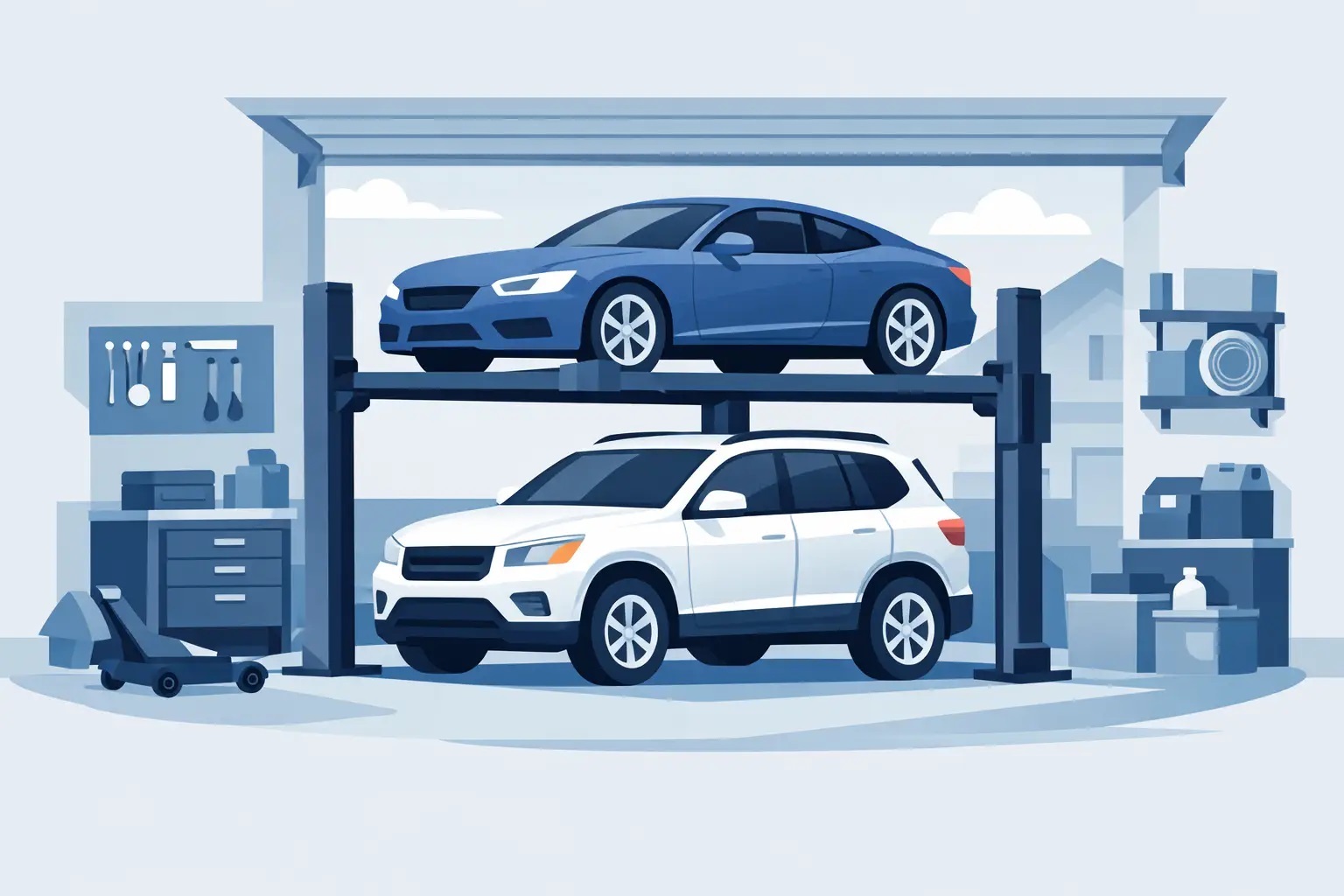
A parking lift for home garage use can turn a crowded two-car building into space for three or four vehicles without adding onto the house. But it is not a purchase to make from platform height and sale price alone. Your ceiling, slab, vehicle dimensions, electrical service, and the way you actually use the garage determine whether a lift is a smart storage investment or an expensive fit problem.
For most collectors and serious enthusiasts, a four-post parking lift is the practical starting point. It supports the vehicle by its tires, provides a stable storage position, and allows a second vehicle to park underneath. The right unit can also serve as a convenient platform for light maintenance, detailing, and underbody access when equipped appropriately.
Start With the Vehicles, Not the Lift Rating
Capacity matters, but it is only one part of the decision. Add the actual curb weight of the vehicle being stored, not a guess based on its class. A 3,500-pound sports car, a 5,500-pound full-size pickup, and a 7,000-pound electric SUV create very different equipment requirements. Include accessories, cargo that may remain in the vehicle, and any future vehicles you reasonably expect to own.
A lift should have comfortable capacity margin rather than being selected at the edge of its rating. A 7,000-pound or 8,000-pound four-post lift may work well for many passenger cars, while heavier trucks and SUVs often justify a 9,000-pound, 10,000-pound, or higher-capacity model. Capacity alone does not confirm fit, however. Check runway width, runway length, drive-on approach angle, wheelbase range, and tire width limits.
Long vehicles can create another issue. A lift may have enough rated capacity for a full-size truck but not enough runway length or clearance at the front and rear to position it safely. Low sports cars may need extended approach ramps. Wide-body vehicles and trucks with large tires need adequate space between the posts and on the runways. Measure the vehicles you own before narrowing the product category.
Ceiling Height Sets the Real Limit
The most common home-garage mistake is treating overall lift height as the only ceiling measurement. What matters is the complete stacked height: the lower vehicle, clearance between vehicles, the lift structure and runways, and the upper vehicle. Door tracks, openers, lights, beams, sprinklers, and ceiling-mounted storage can all interfere.
An 8-foot ceiling generally leaves little room for a conventional vehicle-stacking lift. Garages with 10 to 12 feet of clear height can work for many car-on-car applications, depending on the vehicles and lift design. Taller ceilings provide more flexibility, especially when the lower vehicle is an SUV or pickup. The manufacturer’s dimension drawing should be compared against your actual clear height at the lowest obstruction, not the height listed on a real-estate brochure.
Garage doors deserve special attention. Standard overhead tracks often occupy the exact space needed for the raised vehicle. A high-lift garage-door conversion, side-mount opener, or a different door arrangement may be required before installation. This is a building-planning cost, not an accessory detail.
Choose the Right Parking Lift for Home Garage Storage
Four-post lifts are the standard choice for long-term vehicle storage. They are drive-on, intuitive for most owners, and supported by mechanical safety locks at set heights. Many parking models are designed around compact footprints, while others offer wider runways, longer decks, or higher capacities for trucks and specialty vehicles.
A four-post lift can be freestanding or anchored, depending on the design and manufacturer instructions. Freestanding does not mean it can be placed on any surface without planning. The slab must still meet the stated concrete requirements, the lift must be level, and the installed unit needs to remain protected from vehicle impact and unauthorized operation.
Two-post lifts are excellent service equipment, but they are usually not the first choice for routine stacked parking. They lift from designated frame or lift points instead of supporting the tires. That is useful for repairs, brakes, suspension work, and wheel service, but long-term storage considerations vary by vehicle and manufacturer guidance. If your primary goal is to double storage capacity, a four-post parking lift is usually the more straightforward answer.
Scissor lifts can provide valuable service access in a low-ceiling garage, but most do not create usable parking space underneath. They solve a different problem. Do not buy a service lift expecting it to function like a vehicle stacker.
Verify the Slab, Power, and Installation Plan
The garage slab is a safety-critical part of the installation. Lift manufacturers specify minimum concrete thickness, strength, condition, and curing requirements. Many home slabs are commonly described as 4 inches thick, but that does not automatically make them suitable for every lift or every location. Post loads, anchor requirements, cracks, control joints, slope, and questionable fill conditions need review.
If the lift will be anchored, avoid assumptions about slab thickness based on a tape measurement at the edge of the garage. A qualified installer or concrete professional can help determine whether the foundation meets the equipment requirements. In some cases, a new reinforced pad or localized concrete work is the correct solution.
Electrical needs also vary. Some lifts operate on 110-volt power, while others require 220-volt single-phase service. Plan the circuit, disconnect requirements, outlet location, and cable routing before delivery. A properly located power source keeps cords out of the driving path and makes daily use safer.
Professional installation is often the right call for home buyers, particularly when the building has tight clearances, overhead-door conflicts, anchoring requirements, or a high-value vehicle going overhead. An experienced installer can level the lift, assemble it to the manufacturer specification, set cables and safety locks correctly, and test operation before it carries a load.
Safety Features Are Not Optional Extras
A parking lift should use a mechanical locking system that supports the load at working heights. Hydraulic pressure raises the lift, but the safety locks are what should hold it when parked. Confirm how the locks engage, how they release, and whether both sides must be monitored during lowering.
Look closely at the operating area. You need room to drive on and off without clipping posts, enough side clearance to open doors, and a clear path around the lift for inspection. Wheel stops, drip trays, jack trays, and approach ramps can be useful accessories, but they need to match the model and the vehicles involved.
Daily habits matter as much as equipment features. Center the vehicle on the runways, use the proper chocks or wheel stops, raise the lift evenly, and lower it onto the locks before leaving it stored. Keep children and untrained users away from the controls. Never work beneath a vehicle unless the lift is positioned on its approved mechanical safety locks and the manufacturer’s instructions allow that activity.
Budget for the Whole Project
The lift price is only one line in the project budget. Delivery access, unloading, installation, electrical work, door modifications, permits, concrete upgrades, and accessories can materially change the total. Financing may make a larger-capacity or better-fitting unit attainable, but it should not replace a realistic installation budget.
Also consider how often the lower parking position will be used. If the lift stores a seasonal collector car above a daily driver, the arrangement is efficient. If both vehicles need to leave at different times every day, stacked parking can become inconvenient. Some owners solve this by placing the least-used vehicle above, while others use the lift mainly for winter storage or to free a bay for a project car.
A good lift purchase begins with measurements, vehicle weights, and a clear use plan. Gather those details before you compare models, then work with an equipment specialist who can match capacity, footprint, and installation requirements to your garage. That preparation is what turns vertical space into dependable vehicle storage.
Recent Posts
-
On-Car Brake Lathe Benefits for Busy Shops
On-Car Brake Lathe Benefits for Busy Shops A customer comes back after a brake job with a pulsing p …9th Sep 2026 -
Automotive Shop Air Compressor Sizing Guide
Automotive Shop Air Compressor Sizing Guide A compressor that looks adequate on a spec sheet can be …9th Sep 2026 -
Buying a Parking Lift for Your Home Garage
Buying a Parking Lift for Your Home Garage A parking lift for home garage use can turn a crowded tw …9th Sep 2026