
Best Low Ceiling Car Lift for Your Shop
Best Low Ceiling Car Lift for Your Shop
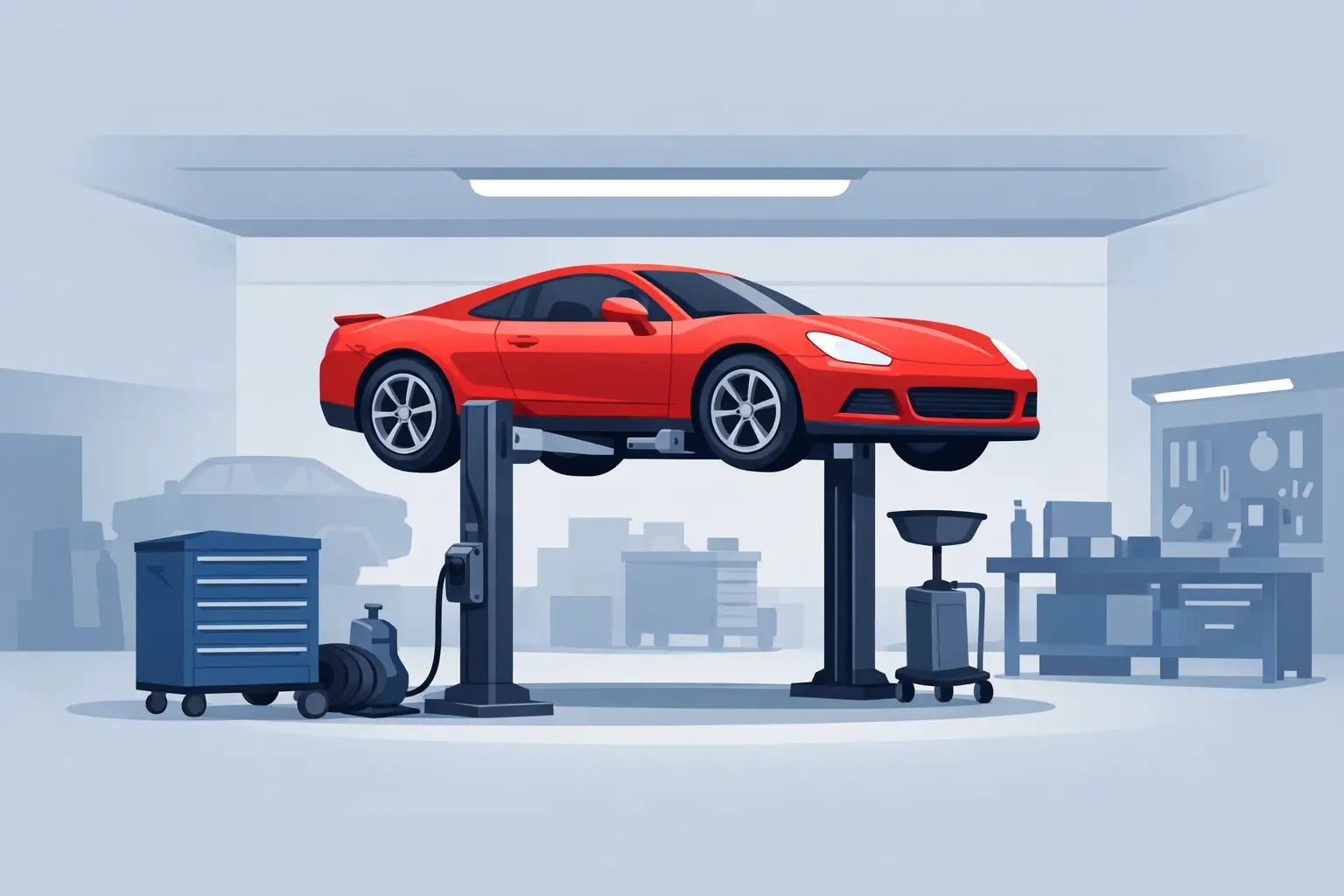
A low roof does not automatically rule out a productive service lift. The best low ceiling car lift is the one that gives your technicians useful working height without putting a vehicle roof, open hatch, or lift structure into the building. That requires more than measuring from slab to rafters. Vehicle height, lift design, door travel, overhead obstructions, concrete, and the jobs you intend to sell all matter.
For a home garage, the goal may be easier maintenance and storage. For a repair facility, the decision affects billed hours, technician comfort, bay throughput, and future vehicle coverage. Start with the building, then select the lift configuration that makes the most of the available height.
Start With the Real Ceiling Height
Measure the finished concrete floor to the lowest fixed obstruction, not to the highest point of a peaked roof. Steel trusses, bottom chords, lighting, sprinkler piping, garage-door tracks, heaters, ventilation ducts, and electrical runs can all become the actual clearance limit. Measure several points in the proposed bay because a floor that looks level can still vary enough to matter.
Next, account for the vehicle at its highest point. A sedan may be straightforward, but a pickup with a roof rack, a full-size SUV, a van, or a vehicle with its rear hatch raised changes the equation quickly. A lift can technically fit under the roof while still leaving a technician unable to perform undercar work comfortably.
Ask three practical questions before comparing models: What is the lowest obstruction? What vehicles are serviced most often? How much under-vehicle working height is truly needed? An oil-change-only bay can work with less rise than a general repair bay handling transmission, exhaust, suspension, and tire work.
Best Low Ceiling Car Lift Types
There is no single lift style that wins in every low-clearance building. The right choice depends on whether full undercar access, wheel service, alignment work, storage, or a portable installation is the priority.
Low-ceiling two-post lifts
A two-post lift is often the first choice for a working repair bay because it provides open wheel access and broad access to the underside of the vehicle. Low-ceiling versions are commonly built with shorter columns and without an overhead crossbar. This design can fit buildings where a conventional overhead two-post lift cannot.
The trade-off is that a clear-floor overhead configuration routes equalization cables and hydraulic lines above the vehicle. On a low-ceiling model, those components may run across the floor or use a baseplate connection between the columns. That baseplate is durable and practical, but it creates a low threshold technicians roll over when positioning vehicles, jacks, carts, and transmissions.
For independent shops that need brake, suspension, tire, and general mechanical access in a restricted-height bay, a properly sized low-ceiling two-post lift is usually the most productive option. Verify the published overall column height, maximum lift height, arm reach, and minimum pad height. Do not assume a shorter column means every truck or SUV will be a good fit.
Low-rise and mid-rise scissor lifts
Scissor lifts make sense when ceiling height is too limited for meaningful full-rise operation or when floor space must remain flexible. A low-rise scissor lift is excellent for tires, brakes, detailing, body work, inspections, and many quick-service jobs. When lowered, it has a much smaller visual and operational footprint than a post lift.
A mid-rise scissor lift adds more working height while retaining a compact layout. It can be a strong choice for home garages, tire shops, and multipurpose bays. The limitation is undercarriage access. The platforms or center structure can block certain service areas, and wheel-free work may require a compatible jack or accessory.
For shops focused on speed, a scissor lift can be a revenue tool. For a technician performing frequent exhaust, driveline, or transmission repairs, it may become a compromise. Match the lift to the repair mix rather than buying solely on ceiling height.
Four-post lifts for storage and drive-on work
A four-post lift is a natural fit for vehicle storage, inspections, oil service, and drive-on convenience. It is especially appealing to collectors and home-garage builders who want simple loading and a stable storage platform. Some low-ceiling four-post models are designed specifically for buildings with restricted vertical clearance.
The central issue is stacked height. If one vehicle will be stored above another, calculate the height of both vehicles, the runway height, and safe clearance between them and the roof. A low sports car over another low car is a different situation from a truck over an SUV. For service use, add a rolling bridge jack if wheel-free work is part of the plan.
Four-post lifts generally use more floor area than two-post lifts, so bay width and vehicle approach room deserve attention. They are not automatically the best answer for every low ceiling, but they can be the most practical answer where storage is as valuable as repair access.
Capacity Should Follow Your Vehicle Mix
Capacity is not a place to cut corners. A lift that handles the average passenger car may be the wrong purchase if the shop regularly sees heavy electric vehicles, full-size pickups, cargo vans, or fleet SUVs. Battery-electric vehicles in particular can put substantial weight into a low-mounted battery pack, while trucks may require more arm reach and a wider working envelope.
Choose a capacity rating that covers the heaviest vehicles you expect to service, with room for how the lift will actually be used. A two-post lift also needs correct lifting points and compatible arm geometry. A high rating alone does not guarantee that every vehicle can be positioned safely.
For a mixed-use repair shop, it is often better to dedicate a constrained-height bay to passenger cars and lighter trucks while preserving taller bays for larger commercial vehicles. That approach keeps the low-ceiling bay productive without forcing it to do work the building cannot support.
Concrete and Installation Can Make or Break the Purchase
Every lift manufacturer specifies minimum concrete thickness, compressive strength, anchor requirements, and slab condition. Those requirements are not suggestions. The slab must support the lift, the vehicle load, and the leverage placed on anchors during lifting and lowering.
Before ordering, identify whether the floor contains cracks, post-tension cables, radiant heat tubing, unusually thick coatings, or previous patches. New construction offers more flexibility, but an existing garage may need a professional slab evaluation before anchors are drilled. The concrete must meet the specifications for the exact lift model, not a general rule borrowed from another installation.
Electrical service also deserves early attention. Confirm the lift's voltage and phase requirements, the location of the power unit, disconnect needs, and routing for conduit. Plan lighting around raised vehicles and make sure overhead doors can fully operate without contacting a vehicle or lift structure.
Features Worth Paying For
Low clearance increases the value of details that reduce positioning mistakes and improve day-to-day safety. Automatic arm restraints on a two-post lift, dependable mechanical safety locks, low-profile pickup pads, and properly designed truck adapters all have direct operational value. On a drive-on lift, look at runway width, approach ramp length, tire clearance, and jack compatibility.
ALi certification is worth considering for commercial use because it verifies a lift model against recognized safety and performance requirements. It does not replace correct installation, operator training, routine inspection, or manufacturer-specified maintenance. A good lift is only as safe as the slab, installation, and people using it.
Also consider serviceability. Hydraulic hoses, cables, sheaves, locks, and wear pads are normal maintenance items. Buying a lift through an established equipment supplier gives you a better path for matching accessories, reviewing fitment, and planning the installation before freight arrives.
A Better Way to Compare Low-Ceiling Lifts
Build a short list using the manufacturer dimensions, then eliminate models that fail your hard limits: overall height, required ceiling clearance, slab requirements, capacity, and available bay width. From there, compare how each lift handles the vehicles and work that generate the most revenue.
If the bay is mainly for general repair, prioritize usable rise and open access. If the bay supports tire, brake, and inspection work, a scissor lift may deliver better value per square foot. If the project is storage-first, a four-post lift may make the building far more useful. MyToolEquipmentGuy.com can help buyers compare configurations, capacities, and installation factors before committing to a lift.
The right low-ceiling lift does not make a short building taller. It makes the space you already own safer, more productive, and better suited to the vehicles that come through the door.
Recent Posts
-
On-Car Brake Lathe Benefits for Busy Shops
On-Car Brake Lathe Benefits for Busy Shops A customer comes back after a brake job with a pulsing p …9th Sep 2026 -
Automotive Shop Air Compressor Sizing Guide
Automotive Shop Air Compressor Sizing Guide A compressor that looks adequate on a spec sheet can be …9th Sep 2026 -
Buying a Parking Lift for Your Home Garage
Buying a Parking Lift for Your Home Garage A parking lift for home garage use can turn a crowded tw …9th Sep 2026