
Auto Shop Equipment That Earns Its Floor Space
Auto Shop Equipment That Earns Its Floor Space
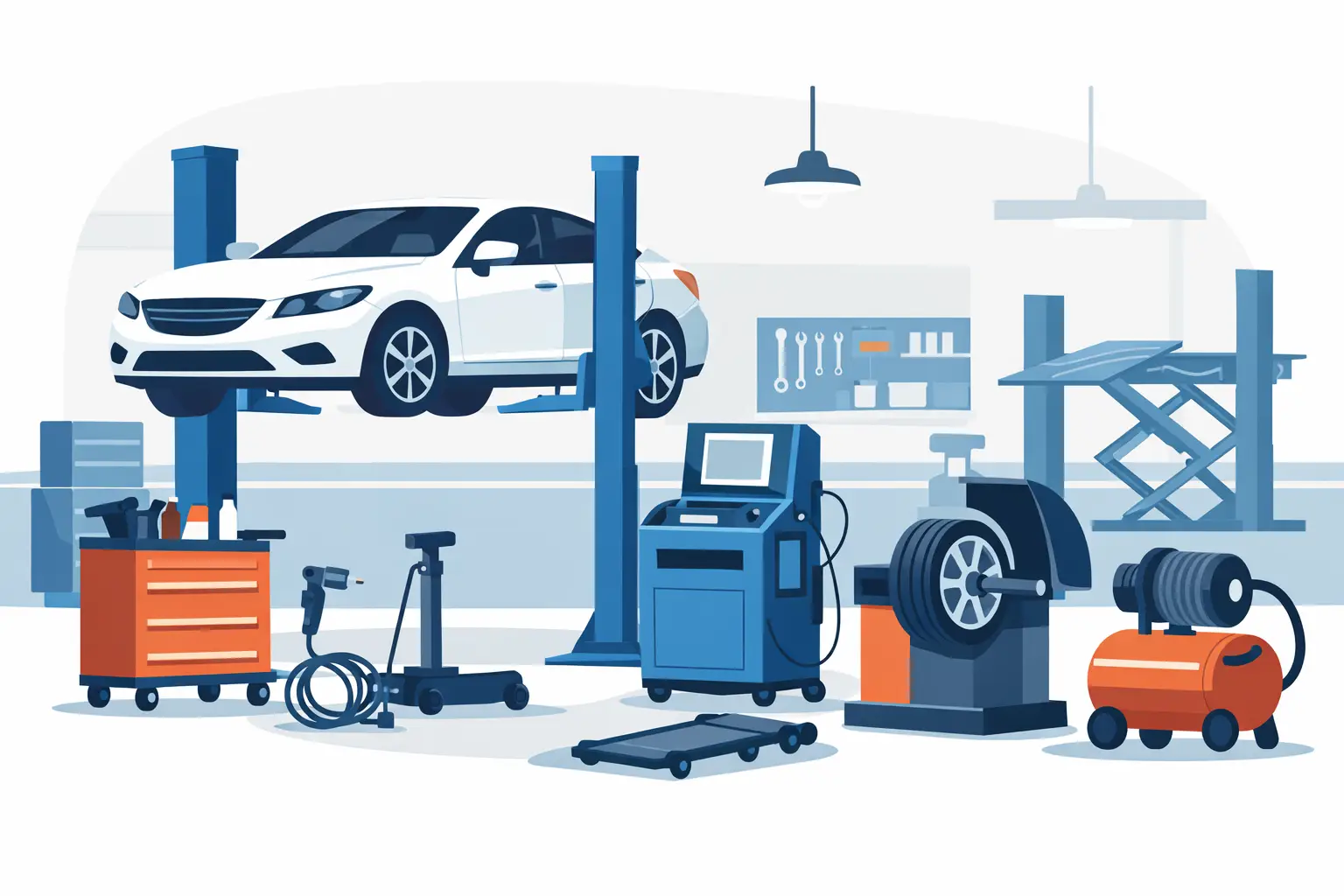
A new lift can bring in billable work from its first week. A poorly planned equipment purchase can tie up cash, block service bays, or force expensive building changes. The difference is not simply buying better brands. It is selecting auto shop equipment around the work your facility actually performs, the vehicles you expect to service, and the physical limits of the building.
For an independent repair shop, a dealership department, a tire store, or a fleet operation, equipment needs to do more than look capable on a quote sheet. It has to improve bay throughput, protect technicians, support the next profitable service category, and remain serviceable for years.
Start With the Work You Want to Sell
The best equipment plan begins with your revenue mix, not a catalog category. If most of your current work is oil changes, brakes, suspension, and tires on passenger vehicles and light trucks, your priorities will be different from a collision center handling structural repair or a fleet shop servicing Class 6 through Class 8 trucks.
Look at the jobs your technicians turn away, subcontract, or struggle to complete efficiently. Those jobs often point directly to the next equipment purchase. A shop sending alignments elsewhere may need an alignment-capable lift, wheel alignment system, and the correct turnplates and accessories. A general repair business losing truck customers may need a lift with more capacity, longer runways, and a wider drive-through configuration.
There is also a difference between buying for current volume and buying for expected volume. Purchasing a 10,000-pound two-post lift can be the right move for a light-duty shop, but it may become restrictive if half-ton and three-quarter-ton trucks are becoming a larger part of the schedule. Oversizing every purchase is not always economical. Selecting capacity with a realistic growth margin usually is.
The Lift Is the Center of Most Auto Shop Equipment Plans
Vehicle lifts typically determine bay layout, concrete requirements, ceiling clearance, electrical planning, and workflow. Before comparing prices, define the vehicle classes, wheelbases, lifting points, and service procedures each lift must handle.
Two-post lifts for general mechanical work
Two-post lifts are the workhorse choice for brake, tire, suspension, steering, exhaust, and undercar service. They leave wheels and much of the undercarriage accessible, which helps technicians move quickly through common repair orders. Symmetric, asymmetric, clear-floor, and low-ceiling designs each solve different installation and vehicle-positioning needs.
Capacity matters, but arm reach and door clearance matter too. A lift that technically handles a truck's weight may still be a poor fit if the arms do not reach the approved lifting points or the shop cannot open vehicle doors comfortably. Verify the manufacturer’s lifting-point guidance for the vehicles you service most often.
Four-post lifts for service, alignment, and storage
Four-post lifts use runways, making them a strong choice for inspections, tire work, alignment service, vehicle storage, and applications where drive-on loading is preferred. Alignment versions require the proper runway configuration, slip plates, turnplates, and jacking bridge options. A standard four-post storage lift is not automatically ready for precision alignment work.
For collectors and home-garage builders, four-post lifts can provide useful parking storage. For commercial facilities, they can also keep vehicles moving through inspection and maintenance lanes. The trade-off is that runway access is different from open-wheel service on a two-post lift, so shops often benefit from a mix of lift styles rather than one style in every bay.
Scissor, low-rise, and specialty lifts
Scissor lifts fit well where floor space, ceiling height, or fast drive-on service is a concern. They are common in tire, quick-service, alignment, and body-shop settings. Low-rise models can be useful for wheel and brake work, while full-rise scissor lifts can support more extensive undercar service.
Motorcycle lifts, parking lifts, heavy-duty truck lifts, and mobile column systems serve more specialized markets. These purchases should be based on a clear application. A heavy-duty lift rated for 30,000 pounds or more requires a different facility conversation than a light-duty service lift, including floor design, electrical supply, approach clearance, and technician training.
Building Requirements Are Part of the Purchase
A lift price is only one part of the installed cost. Concrete thickness and strength, slab condition, ceiling height, bay width, power supply, door height, drainage, and local permitting can affect what can be installed and where.
Do not assume an existing slab is ready because it looks thick. Post lifts place concentrated loads at the columns, and manufacturer requirements vary by model and capacity. New construction can be planned around the selected equipment. Existing buildings may require core sampling, engineering review, or a different lift configuration.
Ceiling height deserves the same attention. A clear-floor two-post lift may need room for an overhead equalization system, while a low-ceiling model may address height limitations with a different design. Measure the lowest obstruction, not just the advertised building height. Lighting, ductwork, sprinkler lines, garage-door tracks, and trusses can all reduce usable clearance.
Plan vehicle traffic as carefully as lift placement. A bay that works on paper can become a bottleneck if a technician cannot pull a vehicle in, open doors, move a transmission jack, or access the tool area without crossing another technician’s workspace.
Build Supporting Systems Around Bay Throughput
Lifts produce the most value when the rest of the bay keeps pace. A technician should not have to wait for air, wheel-service equipment, fluid evacuation, diagnostic access, or a jack that is parked in another department.
Air compressors are a common example. Compressor selection should account for required PSI, total CFM demand, duty cycle, air-tool use, tire machines, and future expansion. An undersized unit can cause pressure drops and lost time across the shop. A larger system may cost more upfront but can be the more practical choice when multiple bays operate air tools at the same time.
For tire service, match the tire changer and wheel balancer to the wheels you see every day, including larger truck tires, low-profile assemblies, and specialty wheels. A basic changer may suit standard passenger-car tires, while high-volume tire shops often need assist arms, bead-blast capability, and a balancer with faster data entry and wider wheel coverage.
Diagnostic tools should be selected with the same discipline. Consider the makes and models you service, required scan-tool functions, subscription costs, programming needs, and the technician skill level needed to use the system effectively. A diagnostic platform that sits unused because it is too limited or too complicated does not add value.
Oil drains, fluid evacuators, brake lathes, shop presses, transmission jacks, welding equipment, and storage systems may seem secondary during a major shop build. They are not. These tools affect whether a lift bay remains productive between large jobs. Proper storage also keeps adapters, lift pads, wheel weights, fluids, and specialty tools where technicians can find them.
Safety Features Are Operating Requirements
Equipment safety is not an optional upgrade. Use lifts and related systems that meet the applicable standards for the work being performed, and follow manufacturer installation, inspection, maintenance, and operating instructions.
Technicians need documented procedures for lift positioning, pad contact, adapter use, lock engagement, load limits, and pre-lift inspections. This is especially important when servicing electric vehicles, long-wheelbase trucks, cargo vans, and vehicles with nonstandard lifting points. The vehicle owner’s manual and lift manufacturer guidance should both be part of the process.
Routine inspections prevent small problems from becoming downtime. Check cables, chains, hoses, anchors, locks, arm restraints, pads, runways, and control functions according to the equipment schedule. Keep lift adapters and accessories matched to their intended models. Improvised blocks, damaged pads, and missing hardware have no place in a working bay.
Buy for Total Cost, Not Just the Sale Price
Low pricing matters, especially when building or expanding a shop. But the lowest initial price is not always the lowest operating cost. Compare capacity, warranty coverage, replacement-parts availability, certification status where applicable, included accessories, shipping details, installation requirements, and service support.
For a multi-bay buildout, package planning can simplify the process. Buying lifts, tire equipment, air systems, jacks, and shop support equipment from one knowledgeable supplier helps prevent mismatched specifications and overlooked installation requirements. MyToolEquipmentGuy.com has served the industry since 1984 and can help buyers compare equipment configurations, capacity ranges, and practical installation needs before an order is placed.
Financing may also change the decision. If equipment allows a shop to add profitable alignment, tire, ADAS-related diagnostic, or fleet-service work, spreading the cost can preserve working capital for payroll, inventory, and the early operating months of an expansion. The key is to project the payment against realistic added gross profit, not best-case volume.
A Practical Equipment Purchase Sequence
When setting up a new facility, buy in the order that gets vehicles safely into productive bays. Start with lift layout and building requirements. Then add the air system, essential jacks and fluid equipment, tire and wheel-service machines, diagnostics, and specialized equipment tied to your planned services.
Avoid purchasing every specialty tool before the shop has a defined demand for it. At the same time, do not underbuy the core equipment that technicians use on nearly every repair order. A well-chosen lift, dependable compressed air, proper tire equipment, and organized service tools will earn their space long before a niche machine does.
The right equipment plan gives technicians fewer reasons to wait, customers fewer reasons to go elsewhere, and owners a clearer path to profitable growth. Measure the building, study the work mix, and make each major purchase support the next vehicle that rolls into the bay.
Recent Posts
-
Auto Shop Equipment That Earns Its Floor Space
Auto Shop Equipment That Earns Its Floor Space August 28, 2026 A new lift can bring in billable w …28th Aug 2026 -
Car Lifts: Choosing the Right Type for Your Shop
Car Lifts: Choosing the Right Type for Your Shop August 27, 2026 A lift bay that is too slow, too …27th Aug 2026 -
TUXEDO Distributors Update
View this email in your browser …4th Jun 2026