
Auto Body Paint Booth Requirements for Shops
Auto Body Paint Booth Requirements for Shops
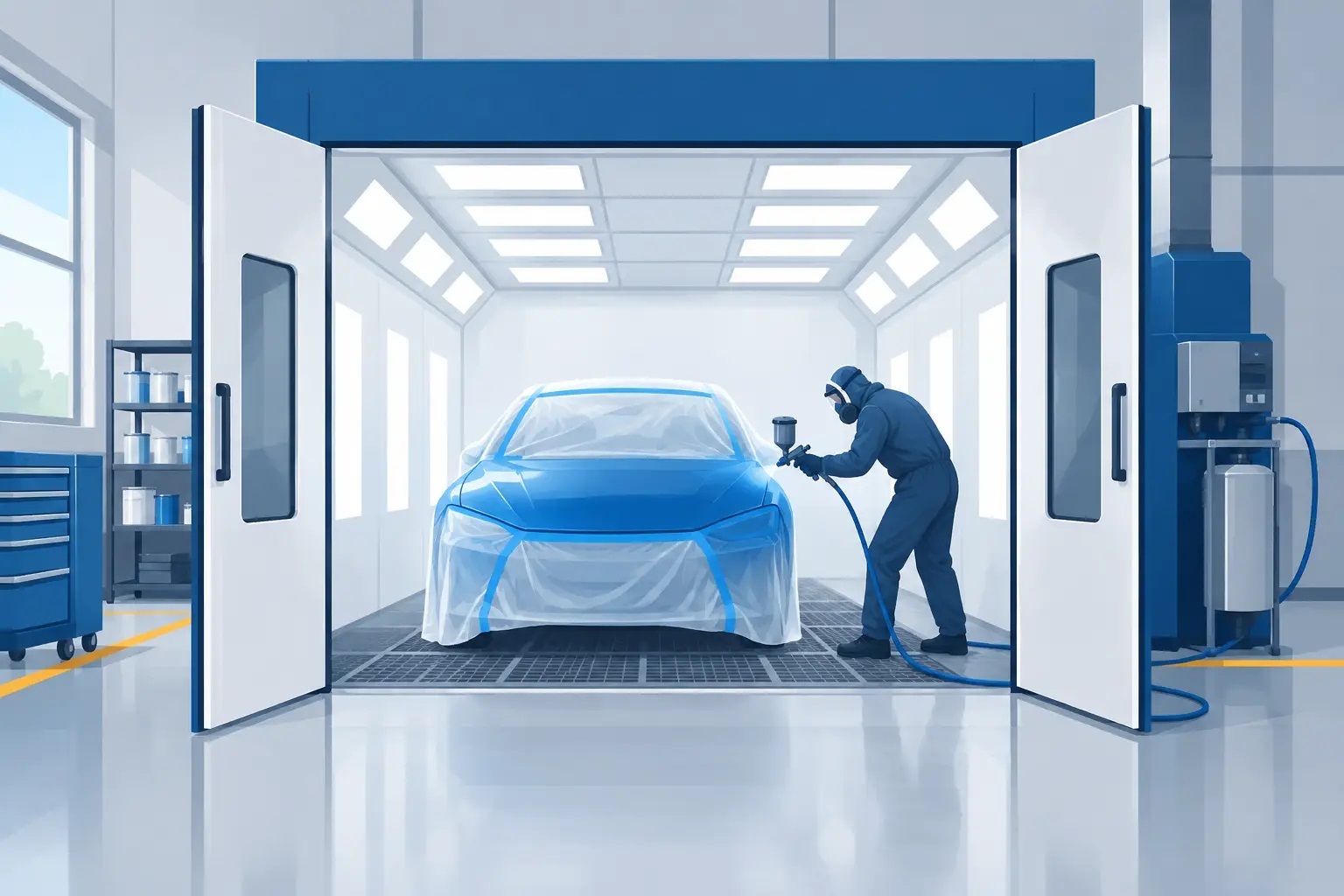
A paint booth is not a plug-in shop accessory. It is a life-safety system, an air-management system, and a production asset that has to work with your building from day one. Getting auto body paint booth requirements right before equipment is ordered helps prevent expensive changes to ductwork, concrete, electrical service, fire protection, and permits after the booth arrives.
For a collision center, dealership body department, or growing independent shop, the right booth is the one that meets local code, fits the refinishing workload, and can be serviced without bringing production to a halt. The booth price matters, but so do the installation conditions around it.
Start With the Authority Having Jurisdiction
The first requirement is not a booth model. It is determining what your local Authority Having Jurisdiction, commonly called the AHJ, will require. Depending on the location, that may involve the building department, fire marshal, state environmental agency, county air-quality district, and electrical inspector.
Auto body refinishing involves flammable and combustible liquids, vapor-producing processes, heated equipment, electrical components, and exhaust discharge. That puts paint booths under multiple layers of regulation. Most jurisdictions use versions of NFPA fire codes, International Fire Code requirements, National Electrical Code rules, mechanical codes, and local environmental regulations. The adopted edition and local amendments can vary widely.
Contact the AHJ before signing a lease, pouring a pad, or ordering equipment. Ask what permits apply to a new booth, a replacement booth, and a change in coating volume. Also ask whether engineered plans, fire-suppression modifications, emissions permits, and final airflow testing are required. A reputable installer and equipment supplier can help identify common planning issues, but only the local AHJ can approve the installation.
Airflow and Exhaust Are Core Paint Booth Requirements
A booth needs controlled airflow to move overspray and vapor away from the painter, carry contaminants to the filters, and create a clean finish environment. The airflow design must match the booth type, its size, the products being sprayed, and the manufacturer specifications.
Crossdraft booths pull air from filtered doors or intake sections across the vehicle and toward an exhaust chamber. They are often a practical choice where budget and building limitations are major factors. Downdraft booths bring filtered air down from the ceiling and exhaust through a pit or raised-floor plenum, providing a cleaner, more controlled finish area. Semi-downdraft and side-downdraft designs can offer useful middle ground when a full pit is not practical.
The trade-off is installation complexity. A downdraft booth may require excavation, a concrete pit, drainage considerations, structural planning, and a dedicated air-makeup system. A crossdraft booth can simplify floor work, but it still needs properly sized exhaust ducting and a compliant discharge location. Do not select a booth based on footprint alone. Confirm the airflow path from intake to discharge before finalizing the layout.
Exhaust ductwork should be sized and routed according to the booth manufacturer and applicable code. Long duct runs, excessive elbows, undersized duct, or poor discharge placement can reduce airflow and create inspection problems. Discharge locations must also account for building openings, property lines, adjacent businesses, roof access, and local environmental requirements.
Makeup Air Cannot Be an Afterthought
Every cubic foot of air exhausted from the booth has to be replaced. Without adequate makeup air, the building can go negative, booth doors can become difficult to open, spray quality can suffer, and combustion appliances may draft improperly.
A dedicated heated makeup-air unit is a major operational consideration in many regions. It can stabilize booth temperature, improve flash and cure times, and keep the shop more comfortable during colder months. The initial investment is higher, but a booth that pulls untreated outside air may cost more in energy, quality control, and technician productivity over time.
Fire Protection, Electrical, and Equipment Listings
Because paint operations use flammable materials, the booth and its associated equipment need a coordinated fire-safety plan. Requirements commonly include an approved fire-suppression system, interlocks that shut down spray operations under alarm conditions, and correctly located fire extinguishers. Whether a building sprinkler system must be upgraded depends on the facility, the booth, and local code interpretation.
Electrical work deserves the same level of planning. Motors, lighting, switches, control panels, heaters, and wiring methods must be appropriate for the booth design and classified locations. Do not assume existing shop power is sufficient. Verify voltage, phase, amperage, disconnect requirements, panel capacity, and the electrical load of fans, lighting, heat, and bake-cycle equipment.
Use equipment that is listed or labeled by an accepted testing laboratory where required. Booth lights, control systems, fans, and heaters should be designed as part of the booth system rather than assembled from unrelated components. Field modifications can affect code compliance, warranty coverage, and safety.
Keep the mixing room in the plan as well. Many shops focus on the booth and overlook where coatings are mixed, stored, and staged. Depending on local requirements and the materials used, the mixing area may need dedicated ventilation, rated storage cabinets, spill control, and electrical provisions suited to the operation.
Building Space, Concrete, and Shop Layout
A booth has a footprint, but the operating envelope is larger. Measure clear ceiling height, door swing, vehicle approach lanes, service clearance around fans and control equipment, and access to filters. Include room for technicians to move around vehicles and for parts carts, masking stands, and panel storage without blocking traffic.
For a standard automotive booth, confirm the largest vehicle you expect to refinish, not just the vehicles you paint today. A booth that works for sedans but cannot comfortably handle a crew-cab pickup, cargo van, or large SUV limits future revenue. Fleet and commercial collision operations may need taller doors, more interior height, and larger work zones.
Concrete requirements depend on the booth configuration. A downdraft pit requires more planning than a surface-mounted crossdraft design. Existing slabs may need engineering review before cutting, trenching, or supporting heavy equipment. If the project includes frame equipment, vehicle lifts, air compressors, or a prep station, coordinate all concrete work as one facility plan. Reopening a finished floor later for utilities costs far more than installing sleeves, trenches, and required reinforcement during construction.
Booth placement also affects daily throughput. The shortest path is usually from body repair to prep, then paint, reassembly, detailing, and delivery. Putting the booth at the far end of a crowded shop may save space on a drawing but adds handling time to every repair order.
Environmental Compliance and Filtration
Filters are not optional maintenance items. They protect the fan system, capture overspray, support finish quality, and help the shop meet permit conditions. Intake filters keep dust out of the spray environment. Exhaust filters capture coating solids before air leaves the booth. Their efficiency, replacement intervals, and disposal method should follow the booth manufacturer, coating supplier guidance, and local requirements.
Environmental rules may address volatile organic compounds, hazardous air pollutants, recordkeeping, coating usage, gun-cleaning methods, and waste handling. Waterborne coatings can change the ventilation and drying strategy, but they do not eliminate the need for compliant booth operation. Your coating system supplier and environmental regulator can clarify whether your planned production volume triggers registration, permitting, or reporting obligations.
A practical filter-change schedule should be based on pressure readings, production volume, spray material, and finish quality, not guesswork. Restricted filters reduce airflow, strain fan motors, and can turn a good booth into a source of dirt and rework.
Plan the Booth as a Production System
Before ordering, put these decisions into one written project scope:
- Booth style, interior dimensions, vehicle mix, and expected refinish volume
- Electrical service, gas or fuel requirements, makeup-air capacity, and heat options
- Exhaust route, discharge location, roof penetrations, and structural support
- Fire suppression, alarms, interlocks, and required inspections
- Concrete, pit, drainage, prep-area, mixing-room, and compressed-air needs
This scope gives installers, electricians, mechanical contractors, and inspectors the same starting point. It also makes comparable equipment quotes much easier to evaluate. A lower booth price is not necessarily a lower installed price if it leaves out heat, ductwork, controls, suppression, or site work.
For shops building or expanding a collision department, MyToolEquipmentGuy.com can help narrow booth configurations around vehicle size, workflow, and installation constraints before you commit to a major equipment purchase. The best time to solve a clearance or utility problem is while it is still a line on a plan, not when a delivery truck is backing into the lot.
A properly specified booth should make the painter's job more predictable, protect the facility, and support faster, cleaner cycle times. Start with the code path and the building conditions, then choose the paint booth that fits the work you intend to win.
Recent Posts
-
Auto Body Paint Booth Requirements for Shops
Auto Body Paint Booth Requirements for Shops A paint booth is not a plug-in shop accessory. It is a …12th Sep 2026 -
Two Post Versus Four Post: Which Lift Fits?
Two Post Versus Four Post: Which Lift Fits? A lift that saves ten minutes per repair can earn its f …11th Sep 2026 -
How to Choose a Frame Rack for Collision Repair
How to Choose a Frame Rack for Collision Repair A frame rack for collision repair earns its floor s …10th Sep 2026