
Are Two-Post Lifts Safe? What Shops Need to Know
Are Two-Post Lifts Safe? What Shops Need to Know
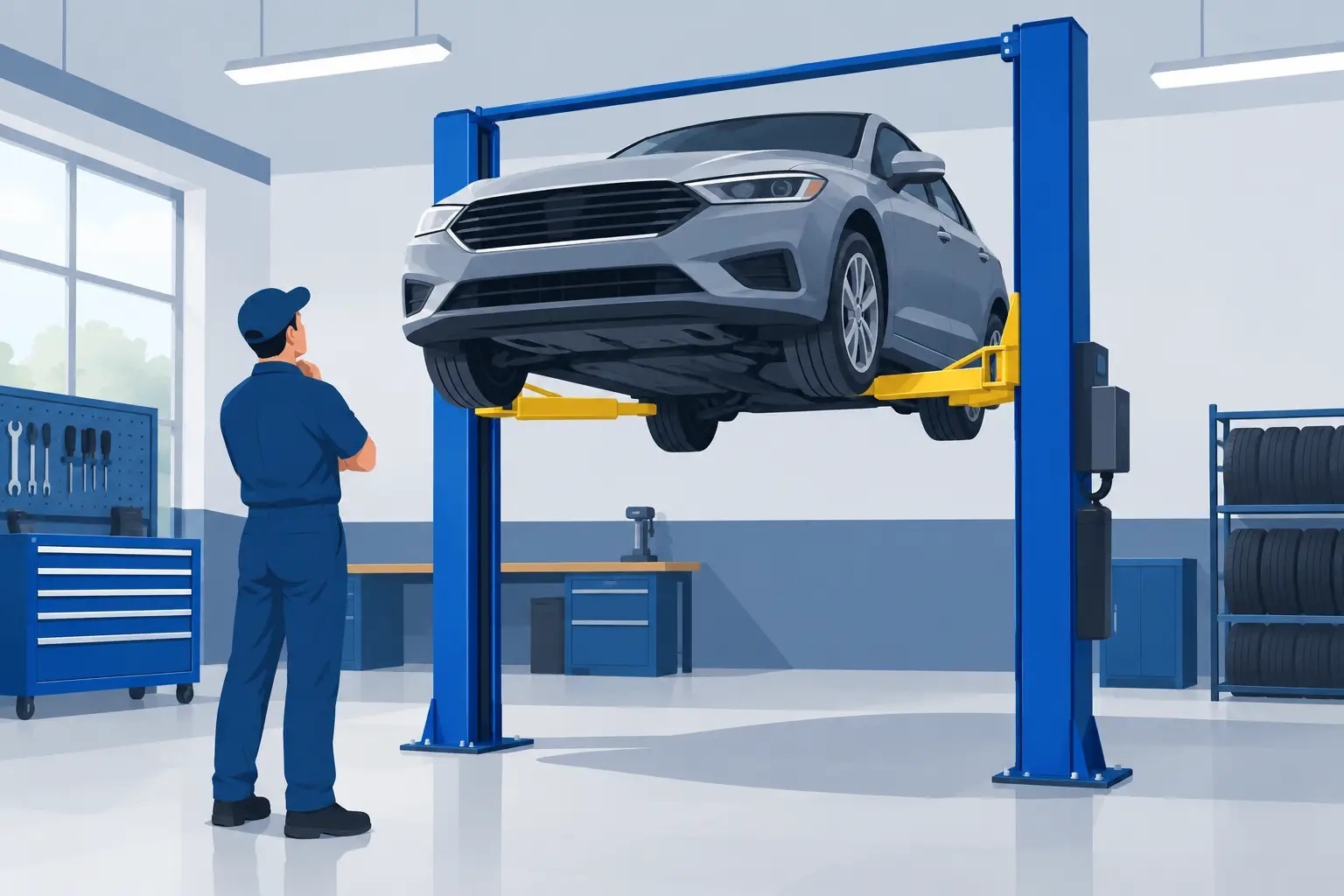
A two-post lift can put a 7,000-pound pickup high enough for transmission work, exhaust repair, or a full undercar inspection while keeping the bay clear. That convenience is exactly why the question, “are two post lifts safe,” deserves a straight answer: yes, when the lift is correctly selected, installed, inspected, and operated. A quality lift is not the weak point in most incidents. Mismatched vehicle capacity, inadequate concrete, rushed arm placement, and skipped maintenance are.
For many repair shops, two-post lifts remain the most versatile choice for general service. They provide wheel-free access, take up less floor space than many four-post configurations, and accommodate a wide range of cars, light trucks, and SUVs. But they also require more attention at the pickup points than a drive-on lift. Safety comes from the complete system - equipment, building, vehicle information, trained operator, and daily discipline.
Are Two-Post Lifts Safe for Professional Use?
Properly manufactured and professionally installed two-post lifts are safe for professional automotive service. The lift should be rated for the vehicles it will routinely carry, built to applicable current safety standards, and used according to the manufacturer’s instructions. For commercial buyers, equipment with third-party safety certification or listing should be a primary purchase consideration, not an afterthought.
A two-post lift supports a vehicle at designated lifting points through four adjustable arms and adapters. The design gives technicians exceptional access to tires, brakes, suspension, driveline components, and the vehicle underside. Unlike a four-post lift, however, the vehicle is not supported by its tires. If the arms are placed incorrectly or the load is badly unbalanced, the vehicle can shift as it rises.
That does not make the design inherently unsafe. It means operators need to treat setup as part of the job. A quick lift-and-shake check at knee height is not wasted time. It confirms that the arms are seated, the pads are contacting approved points, and the vehicle is stable before anyone sends it overhead.
Capacity is more than the number on the column
A 10,000-pound lift is not automatically the right answer for every vehicle under 10,000 pounds. Vehicle weight is only one part of the decision. Wheelbase, width, center of gravity, lift-point locations, arm reach, adapter height, and how the vehicle is loaded all matter.
A long-wheelbase crew-cab pickup may fit within a lift’s stated capacity but still require a model with wider spacing, longer arms, truck adapters, or a higher rise. EVs add another planning point. Their battery packs, reinforced lift points, and curb weights can require specific pad locations and approved adapters. Always follow the vehicle manufacturer’s lifting information, especially when servicing newer EVs, hybrids, vans, and specialty fleet vehicles.
Do not assume a lift is safe because it lifted a similar vehicle last week. Vehicle configurations vary, and aftermarket accessories such as service bodies, loaded toolboxes, roof equipment, and cargo can change weight distribution.
The Installation Determines Much of the Safety
A lift is only as secure as the slab and anchoring system beneath it. Two-post lifts transfer substantial forces into the concrete, particularly when a vehicle is raised to working height. The required slab thickness, concrete strength, cure time, reinforcement conditions, anchor specifications, and installation layout come from the lift manufacturer - not from a general rule of thumb.
Before ordering equipment, measure the bay and review the building conditions. Check ceiling height at the actual lift location, not just the highest point in the shop. Account for overhead doors, lighting, sprinklers, HVAC, roof trusses, and any slope in the floor. A lift may physically fit in a building but still lack the clearance needed to raise a truck safely.
Concrete deserves the same attention. Old slabs, cracked slabs, post-tension slabs, uneven surfaces, and concrete of unknown thickness may need evaluation before installation. Never drill anchors into a slab without confirming it meets the lift manufacturer’s requirements. In some cases, a new engineered pad is the practical answer. It costs less than correcting a failed installation or losing use of a new service bay.
Installation should follow the manufacturer’s manual from start to finish. That includes column layout, leveling, anchor torque, equalization cable routing, hydraulic connections, electrical requirements, and final operational testing. A lift that is out of plumb or incorrectly anchored may operate initially, but that does not make it safe for long-term service.
Safe Lifting Starts Before the Vehicle Leaves the Ground
The most preventable two-post lift problems happen during setup. Technicians should identify the vehicle, confirm its approximate weight, check for unusual loads, and locate the approved lifting points before positioning the arms.
A practical pre-lift routine should include these checks:
- Inspect the arms, pads, adapters, cables, chains, hoses, locks, and anchor area for visible damage, leaks, loose hardware, or unusual wear.
- Position the vehicle so its center of gravity is within the lift manufacturer’s approved loading range.
- Swing each arm into place and use the correct adapters to contact the manufacturer-approved lifting points.
- Raise the vehicle just enough to clear the floor, then verify pad contact and test stability before continuing upward.
- Raise to the desired height, engage the mechanical safety locks, and lower the lift onto those locks before beginning service.
The last step matters. Hydraulic pressure raises the vehicle, but mechanical locks are designed to support it while work is being performed. Technicians should not work beneath a vehicle held only by hydraulic pressure.
Clear communication also matters in busy shops. One technician should control the lift during positioning and raising. Keep other employees clear of the bay, and never allow customers or untrained personnel under or around a raised vehicle. A clean bay reduces trip hazards and makes it easier to spot fluid leaks, fallen adapters, or damaged components.
Maintenance Is a Safety Requirement, Not a Downtime Task
Two-post lifts are working equipment. Cables stretch, pulleys wear, hydraulic hoses age, arm restraints collect debris, and safety locks need adjustment. Waiting until a lift makes an unusual noise is not a maintenance program.
Follow the manufacturer’s inspection intervals and maintenance schedule. Daily checks are generally visual and operational. Periodic service goes deeper, covering equalization systems, lifting cables or chains, sheaves, hydraulic fittings, lock engagement, arm restraints, fasteners, anchors, and structural components. Replace worn parts with manufacturer-approved components rather than improvising repairs.
Keep records of inspections, service, repairs, and any parts replaced. That record helps a shop manager spot recurring issues and demonstrates that the equipment is being maintained responsibly. For multi-bay facilities, assigning lift inspection responsibility to a specific manager or lead technician prevents the common problem where everyone assumes someone else checked it.
If a lift has been struck by a vehicle, overloaded, moved, altered, or exposed to flood damage, take it out of service until it has been properly evaluated. The same rule applies when a cable is damaged, a lock fails to engage, an anchor appears loose, or a column shows signs of movement. Do not keep using the lift to finish one more job.
Two-Post vs. Four-Post: Which Is Safer?
Neither lift type is universally safer. A four-post lift supports the vehicle by its tires on runways, which can make vehicle loading feel more familiar and may suit storage, alignment work, and certain drive-on applications. A two-post lift provides better wheel and undercar access for general repair work, but demands correct pickup-point placement.
The safer choice is the one that fits the work. A tire shop doing frequent brake and suspension repairs may benefit from the open access of a two-post lift. A collector storing vehicles or a shop performing alignment work may prefer a four-post configuration. Shops servicing heavy pickups, vans, or fleet vehicles should look carefully at capacity, arm geometry, and available truck-lift options rather than forcing those vehicles onto a light-duty lift.
At My Tool Equipment Guy, the practical buying conversation starts with the vehicles you service most often, the weight range you expect, your floor conditions, and the clearances in your building. Choosing by price alone can create a costly limitation in the bay for years.
The Bottom Line for Shop Owners
A two-post lift is safe when it is the right model for the work, installed on suitable concrete, operated at approved lifting points, and maintained without shortcuts. The equipment gives a shop speed, access, and revenue-producing capacity that floor jacks cannot match. Treat the lift as a critical piece of shop infrastructure, train every operator to respect the setup process, and it can serve your bays reliably for many years.
Recent Posts
-
Are Two-Post Lifts Safe? What Shops Need to Know
Are Two-Post Lifts Safe? What Shops Need to Know A two-post lift can put a 7,000-pound pickup high …17th Sep 2026 -
Alignment Rack Comparison for Productive Shops
Alignment Rack Comparison for Productive Shops A wheel alignment bay can be one of the most dependa …14th Sep 2026 -
ALI Certified Automotive Lifts: What to Buy
ALI Certified Automotive Lifts: What to Buy A lift can become the center of a profitable service …13th Sep 2026