
Alignment Rack Comparison for Productive Shops
Alignment Rack Comparison for Productive Shops
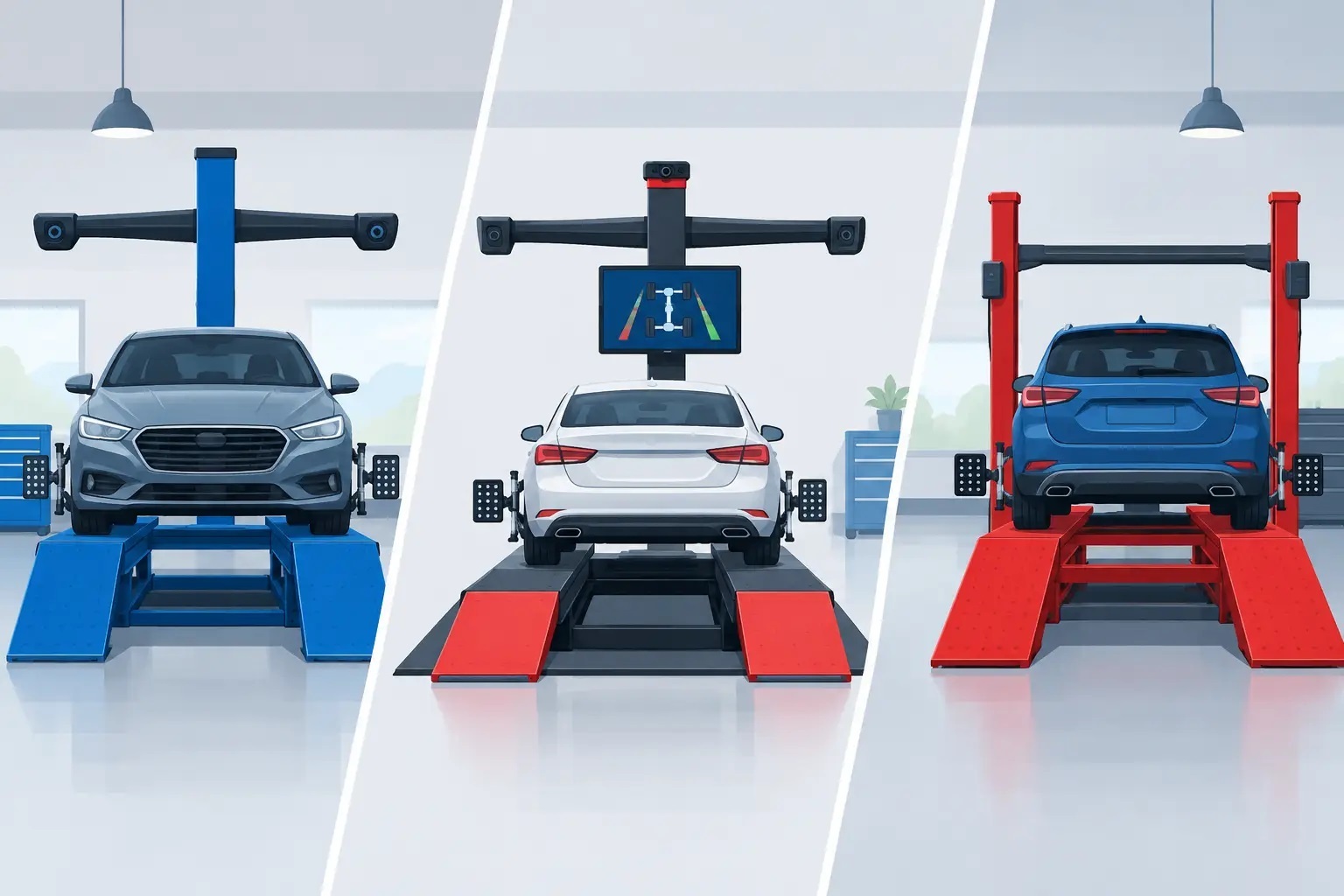
A wheel alignment bay can be one of the most dependable revenue centers in a repair facility, but only when the rack supports the vehicles and workflow coming through the door. This alignment rack comparison focuses on the equipment details that affect daily production: rack configuration, vehicle capacity, alignment accessories, bay dimensions, and service access.
The lowest purchase price rarely tells the whole story. A rack that is undersized, lacks the needed recesses, or makes brake and suspension repairs awkward can slow down every job that follows. The right unit should serve the alignment department without becoming a bottleneck for the rest of the shop.
Start With an Alignment Rack, Not Just a Four-Post Lift
Most alignment racks are four-post runway lifts built or configured specifically for alignment work. They raise the vehicle by the tires, keeping the suspension loaded as it would be on the road. That is necessary for reliable readings and adjustment procedures on most passenger cars, light trucks, SUVs, and fleet vehicles.
A standard four-post lift may look similar, but it is not automatically alignment-ready. A true alignment rack needs provisions for front turntables and rear slip plates, either built into the runways or supplied as properly matched components. Turntables allow the front wheels to steer freely during setup and caster sweeps. Slip plates let the rear wheels move laterally as adjustments are made, preventing tire scrub and suspension bind.
Before comparing prices, confirm exactly what is included. Some racks include turntable pockets, slip plates, approach ramps, wheel stops, and a jack tray as standard. Others are sold as a base runway lift with alignment packages and rolling jacks priced separately. That difference can materially change the installed cost.
Alignment Rack Comparison: The Specifications That Matter
Capacity Should Match the Heaviest Routine Vehicle
A 14,000-pound alignment rack is a common fit for general repair shops that service passenger vehicles, half-ton pickups, vans, and many commercial light trucks. It provides useful margin over a 9,000- or 10,000-pound rack when the shop regularly sees full-size SUVs and work trucks.
For tire stores and independent repair shops focused mainly on cars and light SUVs, a 9,000- to 12,000-pound rack may be sufficient. The trade-off is future flexibility. A rack selected around today’s average repair order can become limiting when a shop adds fleet accounts or begins servicing heavier electric vehicles and commercial vans.
Heavy-duty facilities need to look beyond passenger-car alignment racks entirely. Truck alignment systems may require longer runways, wider track capability, higher capacities, and dedicated heavy-duty alignment equipment. Do not assume a higher-capacity passenger-vehicle rack is suitable for medium-duty or Class 8 work.
Capacity is not the only measurement. Compare the lift’s runway width, overall width, runway length, and wheelbase range. Long-wheelbase crew-cab pickups, cargo vans, and extended SUVs need enough runway length to be positioned safely while retaining access to turntables and slip plates.
Runway Length and Width Determine What Fits
Shorter runways work well in tight bays and for passenger vehicles. Longer runways provide better coverage for trucks and vans, but they demand more building depth and can affect where technicians place alignment consoles, tool carts, and tire equipment.
Runway width deserves the same attention. The spacing between runways must accommodate the track widths of the vehicles you actually service. At the same time, wide runways can make it harder to work between the rails on certain repairs. A shop performing frequent undercar work should consider how the rack supports both alignment production and mechanical service.
Low-profile runways can be valuable for lowered vehicles, sports cars, and vehicles with long front overhangs. They reduce the approach angle required to load the vehicle, although ramp design still matters. Review approach ramp length and weight rating, particularly if your shop handles low-clearance vehicles or heavy pickups.
Open-Front Designs Improve Adjustment Access
An open-front alignment rack leaves the area between the front posts clear. This gives technicians more room around the front suspension and steering components, which is especially useful for caster, camber, and toe adjustments on late-model vehicles.
Closed-front designs can still perform alignment work effectively, but the front crossmember may restrict access on some vehicles. They can also be a good choice where rack structure, price, or building layout makes that design more practical. The best choice depends on the repair mix. A shop performing alignments as part of regular suspension, steering, and tire work will generally appreciate the service access of an open-front model.
Rolling Jacks Turn the Rack Into a Repair Bay
A rolling bridge jack is one of the most valuable additions to an alignment rack. It lifts the vehicle by approved lifting points while it remains on the runways, allowing tire removal, brake inspection, suspension service, and other repairs without moving the vehicle to another lift.
Shops that only perform alignment checks may initially view jacks as optional. In practice, many alignment jobs uncover worn ball joints, tie rods, wheel bearings, struts, brakes, or tires. With a properly rated rolling jack, the technician can perform the approved repair and return the vehicle to the alignment position without giving up the bay.
Compare jack capacity, lifting pad range, air requirements, control location, and compatibility with the specific rack. A 6,000-pound jack may be appropriate for many passenger vehicles, while a shop that routinely handles heavy trucks may need a higher-rated option. Some facilities benefit from two rolling jacks for more complete service capability.
Choose Alignment Accessories Around Your Machine
The rack and alignment machine must work as a system. Camera-based, 3D, and other modern alignment systems have their own requirements for target placement, calibration space, console location, and line of sight. Keep enough clear area around the front and sides of the rack for the system you plan to use.
Turntable pocket dimensions are a frequent compatibility issue. Some alignment machines use specific turntable styles or plates, and replacement parts are not always interchangeable between manufacturers. Confirm whether the rack accepts the equipment you own or intend to buy, including turntables, slip plates, rolling jacks, and any wheel clamps or targets.
The condition and operation of these components matter as much as their presence. Turntables must rotate smoothly and lock when required. Slip plates must move freely during adjustment and lock securely for loading and unloading. If the rack will be used for general repair work throughout the day, technicians need a simple, repeatable way to protect and secure alignment components.
Plan the Bay Before Ordering Equipment
An alignment rack is a building project as well as an equipment purchase. Verify the available bay length, width, ceiling clearance, door placement, electrical service, air supply, and travel path into the bay. A rack may fit on paper yet create poor vehicle circulation once ramps, toolboxes, alignment consoles, and nearby lifts are in place.
Concrete requirements are non-negotiable. The slab must meet the manufacturer’s stated thickness, strength, and condition requirements for the rack being installed. Older floors, cracks, post-tension slabs, floor drains, and radiant heating systems all need review before anchors are drilled. Installation should follow the lift manufacturer’s instructions and applicable local requirements.
Also decide whether you need a surface-mounted rack or a flush-mounted installation. Surface-mounted racks are generally simpler to install and relocate. Flush-mounted configurations can provide a cleaner floor-level entry and may improve workflow in certain high-volume bays, but they require more site preparation and careful drainage planning.
Price the Complete Working Bay
A practical alignment rack comparison should include the full operating package, not only the lift. Account for freight, unloading, installation, electrical work, air plumbing, concrete work if needed, rolling jacks, alignment accessories, the alignment machine, and technician training.
A lower-priced rack can be the right value when it matches the vehicle mix and includes the needed alignment components. A more expensive open-front, higher-capacity rack with rolling jacks may produce a better return when it keeps a busy technician from moving vehicles between bays. The decision comes down to billable work, not just rated capacity.
MyToolEquipmentGuy.com can help shops compare equipment around vehicle type, capacity, facility constraints, and the accessories required to put an alignment bay into service. For a first-time shop build or a replacement purchase, provide the heaviest vehicle you service, your bay dimensions, and the alignment system you plan to run. That information will narrow the field faster than comparing product photos alone.
The best rack is the one that lets your technician load the vehicle quickly, make accurate adjustments without fighting the equipment, complete related repairs in the same bay, and bring the next vehicle in without rearranging the shop.
Recent Posts
-
Alignment Rack Comparison for Productive Shops
Alignment Rack Comparison for Productive Shops A wheel alignment bay can be one of the most dependa …14th Sep 2026 -
ALI Certified Automotive Lifts: What to Buy
ALI Certified Automotive Lifts: What to Buy A lift can become the center of a profitable service …13th Sep 2026 -
Auto Body Paint Booth Requirements for Shops
Auto Body Paint Booth Requirements for Shops A paint booth is not a plug-in shop accessory. It is a …12th Sep 2026