
ALI Certified Automotive Lifts: What to Buy
ALI Certified Automotive Lifts: What to Buy
A lift can become the center of a profitable service bay or the source of an expensive problem. That is why ALI certified automotive lifts deserve more than a quick checkmark during the buying process. Certification addresses whether a specific lift model has been independently evaluated to the applicable safety standard. It does not replace proper installation, technician training, daily inspection, or a concrete slab capable of carrying the load.
For a repair shop, tire center, fleet department, dealership, or serious home garage, the right lift decision starts with the vehicle mix and the work you intend to sell. Certification should be a non-negotiable part of that decision, alongside capacity, bay dimensions, overhead clearance, power requirements, and installer access.
What ALI Certification Actually Means
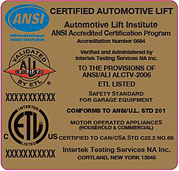
The Automotive Lift Institute, commonly called ALI, operates a third-party lift certification program. A lift carrying the ALI Certified Lift label has been tested and evaluated by an independent nationally recognized testing laboratory to the applicable ANSI/ALI lift safety standard. The label applies to a specific manufacturer, model, and configuration - not to a generic style of lift or an entire brand catalog.
That distinction matters. A two-post lift may look nearly identical to another unit online, yet differences in materials, arm restraints, hydraulic components, locks, cable routing, controls, and tested configuration can be significant. Do not assume a lift is certified because the manufacturer belongs to an industry association, uses similar language in marketing, or offers a comparable capacity rating.
Look for the actual ALI Certified Lift label and confirm that the model number on the equipment matches the certified model you are buying. If you are comparing quotes, ask whether included options such as extended-height columns, wide configurations, truck adapters, or specialty arms are part of the certified configuration. This is particularly important when a lift is being specified for commercial use, municipal fleets, or insurance-sensitive facilities.
ALI certification is also not a promise that any installed lift is safe forever. A certified lift can be compromised by poor anchoring, incorrect setup, unauthorized modification, neglected maintenance, damaged cables, worn arm restraints, or a vehicle loaded outside the manufacturer’s instructions.
Why Certified Lifts Matter in a Working Shop
A vehicle lift supports thousands of pounds overhead, often while a technician is directly beneath the vehicle. The cost difference between lift options can look meaningful on a purchase order, but downtime, a failed inspection, equipment damage, or an injury can erase that savings quickly.
For professional operations, certified equipment supports a more disciplined purchasing standard. Shop owners can document that they selected equipment built and evaluated to a recognized safety benchmark. That can simplify conversations with facility managers, insurers, general contractors, and safety personnel. It also gives technicians more confidence that the lift has the safety devices and operating instructions expected for its rated application.
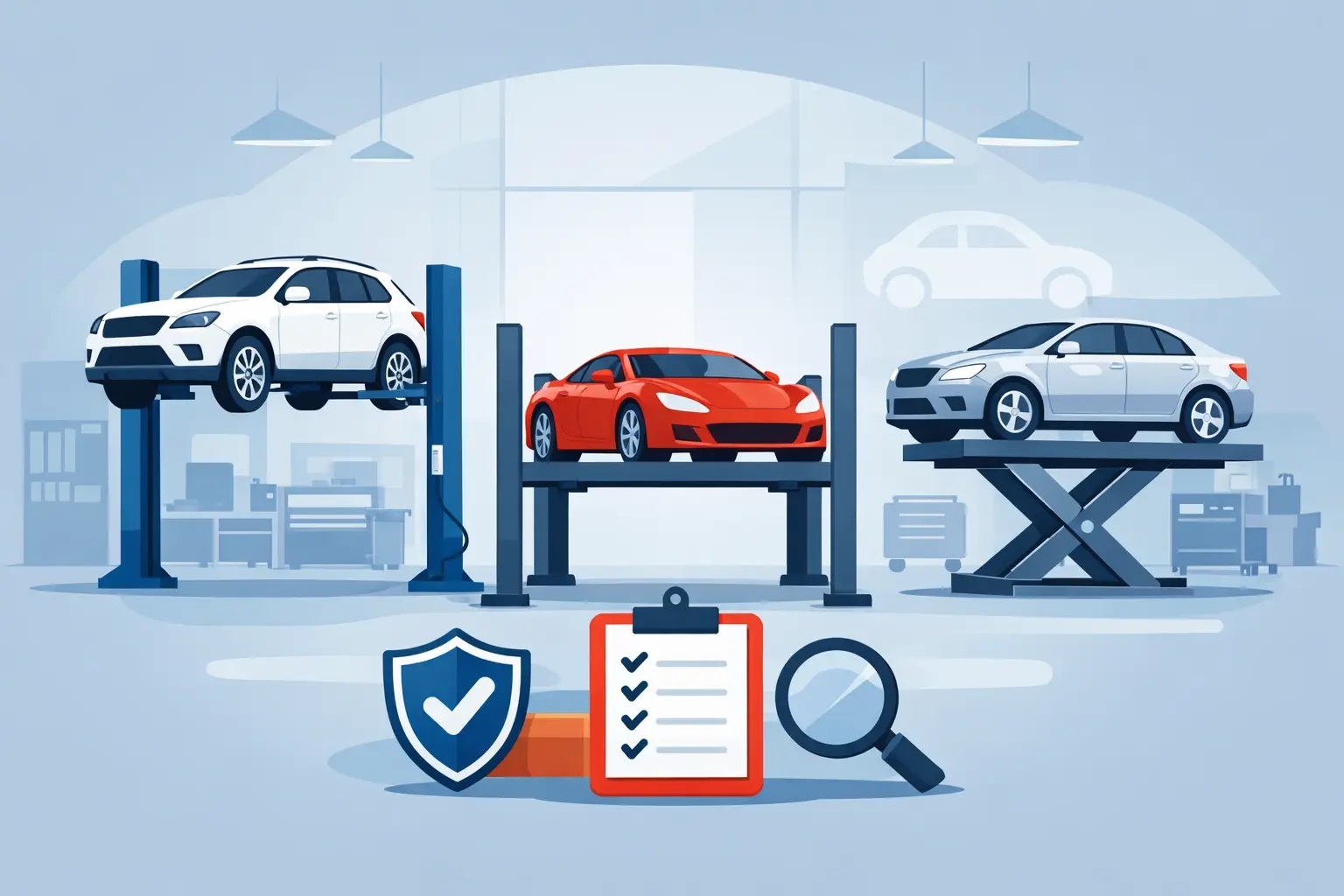
Certification does not mean every shop needs the same lift. A 10,000-pound two-post lift may be the daily workhorse for general repair bays, while a four-post runway lift makes more sense for alignments, vehicle inspections, storage, and certain long-wheelbase vehicles. A low-rise scissor lift may be the right answer for tire and brake work where speed and a small footprint matter more than full undercar access.
The practical point is simple: select an ALI-certified model that fits the actual work, then install and operate it exactly as designed.
Choosing Among ALI Certified Automotive Lifts
Two-post lifts for general repair
Two-post lifts remain a strong choice for mechanical repair because they provide open access to tires, brakes, suspension, exhaust, and much of the undercarriage. They are available in symmetric, asymmetric, and versatile arm configurations, with capacities commonly ranging from light-duty passenger vehicle service to heavier trucks and vans.
Capacity alone should not decide the purchase. Consider the heaviest vehicle you expect to lift, including loaded fleet vans, extended-cab pickups, EVs with large battery packs, and vehicles with unusual lifting points. Also consider door clearance, arm reach, ceiling height, and whether the vehicle mix requires three-stage arms or truck adapters. A 12,000-pound lift can be a smart margin for a busy mixed-vehicle shop, but only if the bay and concrete meet its requirements.
Four-post lifts for runways, service, and storage
Four-post lifts support a vehicle by its tires on runways. They are commonly chosen for alignment service, inspections, oil changes, long-wheelbase vehicles, and storage applications. With the right rolling jacks or bridge jacks, they can also support wheel-free service.
These lifts can be easier to drive onto than a two-post model, but runway width, approach ramp space, vehicle wheelbase range, and accessory needs all deserve attention. If alignment work is part of the revenue plan, select a dedicated alignment-capable runway configuration rather than trying to add precision accessories later to a lift not built for that purpose.
Scissor and specialty lifts
Scissor lifts work well where floor space, speed, or vehicle access at the sides matters. Low-rise models are popular for tires, brakes, detailing, and quick service. Full-rise models can provide more undercar access, although the platform structure naturally blocks some areas beneath the vehicle.
Motorcycle, ATV, truck, bus, parking, and heavy-duty lifts have their own loading and facility requirements. For these applications, certification is still critical, but so is matching the lift to axle loads, wheelbase, track width, drive-on angle, and the way the vehicle enters the bay. A heavy truck lift rated for 30,000 pounds or more is a facility project, not just an equipment purchase.
Installation Is Part of the Lift Purchase
Many lift problems begin before the first vehicle is raised. The installation area must meet the manufacturer’s published requirements for concrete thickness, compressive strength, condition, and levelness. Existing concrete can be a concern if it is cracked, patched, uneven, contaminated, or of unknown depth. Do not guess based on how solid the floor looks.
Ceiling clearance matters just as much. Measure clear height below lights, sprinklers, beams, fans, garage doors, and ductwork. A lift may fit on a building plan but still be impractical when a full-height pickup or van is raised. Low-ceiling lift configurations can solve certain space constraints, though they may involve trade-offs in rise height or vehicle clearance.
Electrical planning should happen early. Verify the lift’s voltage and phase requirements, the location of disconnects, and whether a licensed electrician is needed. For commercial installations, coordinate with the contractor and local authority before delivery. Freight delivery is not the same as placement, assembly, anchoring, or commissioning.
Professional installation is strongly recommended, especially for two-post, in-ground, alignment, and heavy-duty equipment. The installer should follow the manufacturer’s current instructions, use the specified anchors, level the lift correctly, verify lock operation, and test the equipment before it enters service.
Daily Use and Inspection Protect the Investment
The operator’s manual is not paperwork to leave in a drawer. It defines approved lifting points, adapter use, load limits, maintenance intervals, and safety procedures for the specific lift. Technicians should be trained on the model they use, including how to position a vehicle, engage arm restraints, raise to a low height for a stability check, set the mechanical locks, and lower safely.
Before use, inspect visible components and controls for damage, leaks, loose hardware, worn pads, bent arms, frayed cables, malfunctioning locks, and anything unusual. Keep the lift area clear. Never use damaged adapters, improvised blocks, or unapproved extensions to make a vehicle fit. If the vehicle is not stable at the designated lifting points, stop and reassess the setup.
A documented periodic inspection program is good shop practice. High-use commercial lifts benefit from routine professional inspection by a qualified lift inspector, along with manufacturer-required preventive maintenance. That approach catches wear before it becomes downtime during a booked service day.
Buy the Lift Around the Work You Need to Perform
Price matters, and it should. But comparing ALI certified automotive lifts only by sale price or rated capacity leaves out the costs that affect your operation every day: installation scope, needed accessories, bay layout, future vehicle mix, service access, and expected throughput. The cheapest lift that does not fit your trucks, ceiling, concrete, or service menu is not a value.
At MyToolEquipmentGuy.com, equipment buyers can compare lift styles, capacities, and specialty configurations while getting direct help with practical questions before ordering. That is especially useful when a new shop is planning multiple bays or combining lifts with tire equipment, alignment systems, air service, and other major equipment.
Start with the vehicles already coming through your doors, then allow room for the work you want to win next year. Choose a properly certified lift, plan the installation carefully, and treat inspection and training as part of the equipment investment. Your technicians, customers, and schedule will all be better for it.
Recent Posts
-
ALI Certified Automotive Lifts: What to Buy
ALI Certified Automotive Lifts: What to Buy A lift can become the center of a profitable service …13th Sep 2026 -
Auto Body Paint Booth Requirements for Shops
Auto Body Paint Booth Requirements for Shops A paint booth is not a plug-in shop accessory. It is a …12th Sep 2026 -
Two Post Versus Four Post: Which Lift Fits?
Two Post Versus Four Post: Which Lift Fits? A lift that saves ten minutes per repair can earn its f …11th Sep 2026