
Tire Changer Reviews for Serious Shop Buyers
Tire Changer Reviews for Serious Shop Buyers
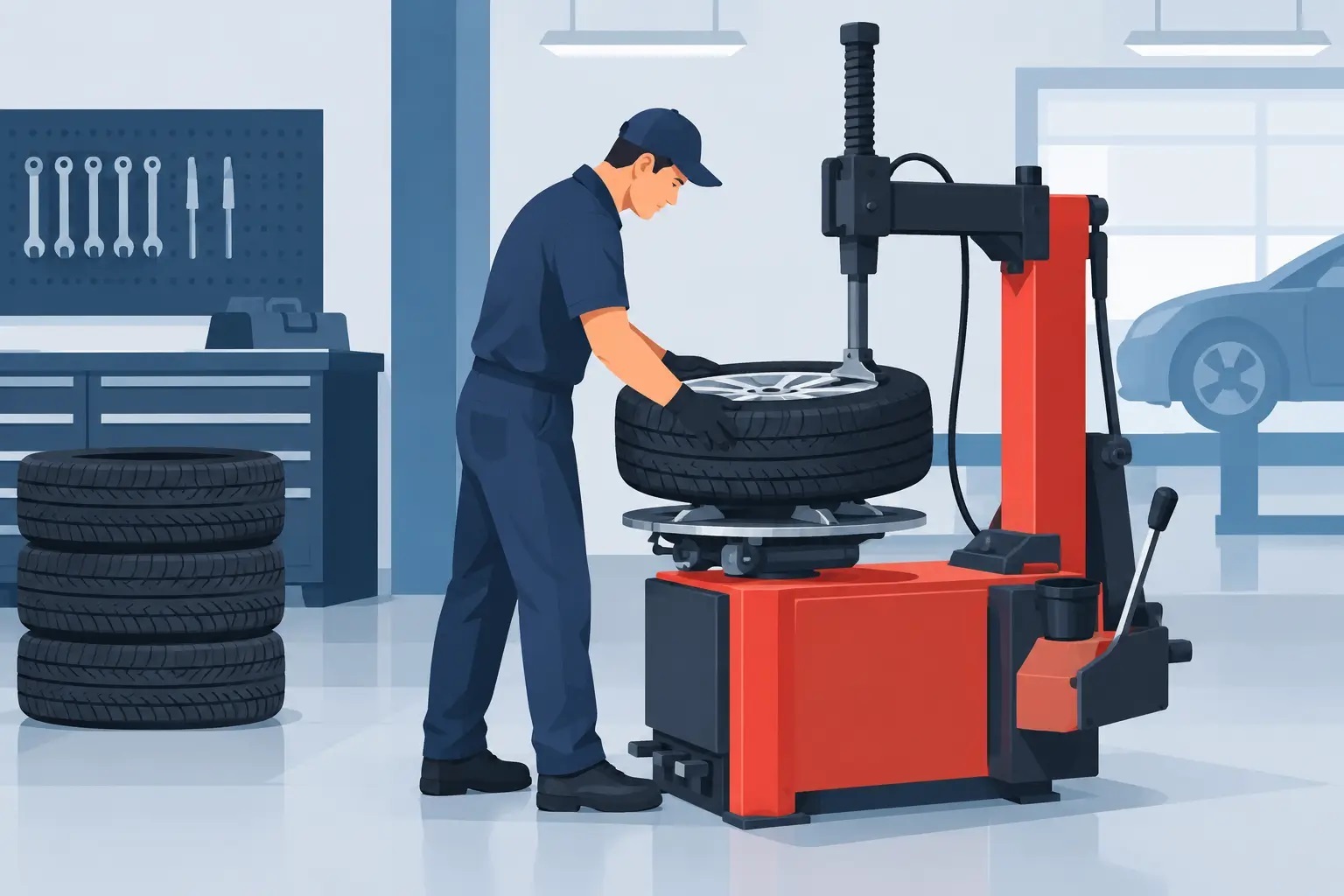
A tire changer can look like a simple piece of shop equipment until it meets a low-profile tire on a 22-inch alloy wheel, a stiff sidewall run-flat, or an expensive custom rim. That is why tire changer reviews should be read as operating reports, not just star ratings. For a working tire shop, dealership lane, or general repair facility, the right machine affects labor time, wheel damage risk, technician fatigue, and the number of profitable tire jobs your bays can handle each day.
The best review is not necessarily the one that calls a machine "great" or "easy to use." It is the one that identifies the vehicle mix, wheel sizes, tire construction, air supply, and operator experience behind the opinion. A basic swing-arm changer may be a strong value for steel wheels and standard passenger tires. The same machine can become a daily bottleneck when a shop starts servicing larger truck wheels, low-profile performance tires, and run-flats.
How to Read Tire Changer Reviews Like a Shop Owner
Start by separating the reviewer from the application. Home-garage users may value a compact footprint and a lower purchase price. A commercial shop needs cycle speed, repeatable clamping, readily available wear parts, and controls that hold up through hundreds of tire changes. Neither perspective is wrong, but they are not interchangeable.
Look for details about the wheel and tire combinations the machine handled. Useful reviews mention rim diameter, wheel width, tire profile, bead stiffness, and whether the unit worked with alloy, chrome, painted, or steel wheels. Comments such as "handled everything" are less valuable unless the writer says what that equipment actually handled.
Also pay attention to reports about setup. Many complaints tied to tire changers are really installation issues: inadequate air volume, moisture in the air system, poor regulator adjustment, insufficient anchoring, or a machine that was not leveled. A changer with pneumatic controls requires clean, dry air at the manufacturer’s stated pressure and volume. If the shop compressor cannot keep up, bead seating and assist functions may feel weak regardless of the changer’s build quality.
Reviews That Matter Most
The most useful tire changer reviews usually answer practical questions: Does the clamp hold securely without marking the wheel? Is the bead breaker strong enough for aged tires and stiff sidewalls? Can one technician complete difficult assemblies without fighting the machine? Are the pedal controls predictable? Is replacement support available when a jaw cover, hose, valve, or cylinder seal eventually needs attention?
Pay close attention when multiple reviewers report the same issue. One complaint about shipping damage may be an isolated freight problem. Repeated comments about limited clamping range, weak assist-arm positioning, or hard-to-source replacement parts deserve a closer look. In commercial equipment, recurring service feedback carries more weight than a single perfect first-impression review.
Match the Changer to the Work You Actually Sell
A common buying mistake is purchasing for the average job rather than the job that creates the most risk. If your shop sees mostly 15- to 18-inch passenger wheels, a conventional tire changer with an appropriate clamping range can be a sensible investment. But if you regularly service late-model luxury vehicles, performance cars, SUVs with large wheels, or commercial light trucks, paying more for additional capability can protect both throughput and customer wheels.
The rim clamping range is the first specification to confirm, but it is not the only one. Check maximum wheel diameter and width, bead breaker force, table speed, and the machine’s ability to accommodate reverse-mount wheels. A published rim range can be misleading if the machine has limited clearance for wide tires or tall wheel-and-tire assemblies.
For many professional shops, an assist arm is where the buying decision changes. Helper arms support the tire during demounting and mounting, control stiff sidewalls, and reduce the physical effort required from the technician. On low-profile and run-flat tires, that added control can prevent damaged beads, scratched rims, and wasted time. A shop that handles these assemblies every day should view an assist arm as production equipment, not an optional convenience.
A leverless or touchless design may be worth considering for facilities focused on high-end alloy wheels. These machines reduce reliance on a traditional mounting bar and can lower the chance of cosmetic damage when properly operated. They carry a higher upfront cost and still require training, but they can make financial sense for dealerships, specialty tire operations, and shops serving customers who expect flawless wheel finishes.
Clamping Style, Bead Breaking, and Wheel Protection
Tire changer reviews often focus on the visible features, but wheel protection deserves equal attention. Internal clamping can be fast and effective, while external clamping may provide better control for certain wheel configurations. The right choice depends on the wheels you service and the manufacturer’s intended operating range.
Look for replaceable plastic jaw protectors, protected contact points, and tooling designed to avoid metal-on-wheel contact. These items wear over time, so availability matters. A low-priced changer becomes costly if consumables are difficult to replace or if technicians improvise with damaged protectors.
The bead breaker is another area where real-world feedback helps. A strong side-mounted bead breaker may be sufficient for standard work. Tougher applications can benefit from more advanced bead loosening systems, especially when tires have rigid sidewalls or corrosion has bonded the bead to the rim. If reviews say the bead breaker struggles, consider whether those reports involve neglected truck wheels or normal passenger-car work. Context decides whether the concern applies to your shop.
Do Not Ignore Air, Power, and Floor Space
Before ordering, confirm the equipment requirements against your building. Tire changers need more than a spot on the floor. Measure the machine’s installed footprint, working envelope, and clearance needed for the swing arm, helper arm, and wheel handling. Leave room for the technician to move safely around the unit and transfer assemblies to the wheel balancer.
Review the air requirement in CFM as well as PSI. A compressor may show adequate pressure on a gauge yet lack the recovery capacity for repeated tire work. Water contamination can also shorten valve and cylinder life. An air dryer, filters, and proper drainage are modest investments compared with downtime from contaminated pneumatic components.
Electrical requirements vary by model. Some changers operate with standard shop power while others require a specific voltage or phase. Verify the power source before the machine arrives, particularly in a new shop build or when adding equipment to an already loaded service area. Plan for delivery access as well. Commercial tire equipment is heavy, and receiving it safely requires appropriate unloading equipment and clear placement instructions.
Serviceability Is Part of the Purchase Price
A tire changer is a revenue-producing asset, but it is also a machine with moving parts, pneumatic lines, seals, pedals, and wear items. Reviews are more useful when they discuss ownership after the first month. Can the operator access common service points? Are manuals clear? Does the supplier offer technical support and parts assistance? Is the brand established enough that routine replacement components are likely to remain available?
This is where buying from an equipment supplier with real shop-equipment experience can be more valuable than chasing the lowest advertised number. Freight, accessories, installation planning, warranty procedures, and parts support all affect the actual cost of ownership. My Tool Equipment Guy has served the industry since 1984 and can help buyers compare equipment based on vehicle mix, budget, and facility requirements rather than a single headline specification.
When a Lower-Priced Changer Is the Better Choice
More capability is not always the better value. A small independent repair shop that performs occasional tire replacement may not recover the cost of a premium leverless machine quickly. A dependable entry-level or mid-range changer, paired with the right wheel-protection accessories and a technician who understands its limits, can be the practical choice.
The key is to avoid buying below your real needs. If your current customer base includes low-profile tires only occasionally but that work is increasing, a unit with an assist arm may be the smarter middle ground. It gives the shop room to grow without paying for every high-volume specialty feature on day one.
Before making the final call, write down the largest wheels, widest tires, and toughest assemblies your shop expects to handle over the next several years. Then compare tire changer reviews against those jobs, not against the easiest tire on the schedule. The right machine should let your technicians work faster, protect the wheels customers trust you with, and keep the tire bay producing when the difficult jobs roll in.
A tire changer can look like a simple piece of shop equipment until it meets a low-profile tire on a 22-inch alloy wheel, a stiff sidewall run-flat, or an expensive custom rim. That is why tire changer reviews should be read as operating reports, not just star ratings. For a working tire shop, dealership lane, or general repair facility, the right machine affects labor time, wheel damage risk, technician fatigue, and the number of profitable tire jobs your bays can handle each day.
The best review is not necessarily the one that calls a machine "great" or "easy to use." It is the one that identifies the vehicle mix, wheel sizes, tire construction, air supply, and operator experience behind the opinion. A basic swing-arm changer may be a strong value for steel wheels and standard passenger tires. The same machine can become a daily bottleneck when a shop starts servicing larger truck wheels, low-profile performance tires, and run-flats.
How to Read Tire Changer Reviews Like a Shop Owner
Start by separating the reviewer from the application. Home-garage users may value a compact footprint and a lower purchase price. A commercial shop needs cycle speed, repeatable clamping, readily available wear parts, and controls that hold up through hundreds of tire changes. Neither perspective is wrong, but they are not interchangeable.
Look for details about the wheel and tire combinations the machine handled. Useful reviews mention rim diameter, wheel width, tire profile, bead stiffness, and whether the unit worked with alloy, chrome, painted, or steel wheels. Comments such as "handled everything" are less valuable unless the writer says what that equipment actually handled.
Also pay attention to reports about setup. Many complaints tied to tire changers are really installation issues: inadequate air volume, moisture in the air system, poor regulator adjustment, insufficient anchoring, or a machine that was not leveled. A changer with pneumatic controls requires clean, dry air at the manufacturer’s stated pressure and volume. If the shop compressor cannot keep up, bead seating and assist functions may feel weak regardless of the changer’s build quality.
Reviews That Matter Most
The most useful tire changer reviews usually answer practical questions: Does the clamp hold securely without marking the wheel? Is the bead breaker strong enough for aged tires and stiff sidewalls? Can one technician complete difficult assemblies without fighting the machine? Are the pedal controls predictable? Is replacement support available when a jaw cover, hose, valve, or cylinder seal eventually needs attention?
Pay close attention when multiple reviewers report the same issue. One complaint about shipping damage may be an isolated freight problem. Repeated comments about limited clamping range, weak assist-arm positioning, or hard-to-source replacement parts deserve a closer look. In commercial equipment, recurring service feedback carries more weight than a single perfect first-impression review.
Match the Changer to the Work You Actually Sell
A common buying mistake is purchasing for the average job rather than the job that creates the most risk. If your shop sees mostly 15- to 18-inch passenger wheels, a conventional tire changer with an appropriate clamping range can be a sensible investment. But if you regularly service late-model luxury vehicles, performance cars, SUVs with large wheels, or commercial light trucks, paying more for additional capability can protect both throughput and customer wheels.
The rim clamping range is the first specification to confirm, but it is not the only one. Check maximum wheel diameter and width, bead breaker force, table speed, and the machine’s ability to accommodate reverse-mount wheels. A published rim range can be misleading if the machine has limited clearance for wide tires or tall wheel-and-tire assemblies.
For many professional shops, an assist arm is where the buying decision changes. Helper arms support the tire during demounting and mounting, control stiff sidewalls, and reduce the physical effort required from the technician. On low-profile and run-flat tires, that added control can prevent damaged beads, scratched rims, and wasted time. A shop that handles these assemblies every day should view an assist arm as production equipment, not an optional convenience.
A leverless or touchless design may be worth considering for facilities focused on high-end alloy wheels. These machines reduce reliance on a traditional mounting bar and can lower the chance of cosmetic damage when properly operated. They carry a higher upfront cost and still require training, but they can make financial sense for dealerships, specialty tire operations, and shops serving customers who expect flawless wheel finishes.
Clamping Style, Bead Breaking, and Wheel Protection
Tire changer reviews often focus on the visible features, but wheel protection deserves equal attention. Internal clamping can be fast and effective, while external clamping may provide better control for certain wheel configurations. The right choice depends on the wheels you service and the manufacturer’s intended operating range.
Look for replaceable plastic jaw protectors, protected contact points, and tooling designed to avoid metal-on-wheel contact. These items wear over time, so availability matters. A low-priced changer becomes costly if consumables are difficult to replace or if technicians improvise with damaged protectors.
The bead breaker is another area where real-world feedback helps. A strong side-mounted bead breaker may be sufficient for standard work. Tougher applications can benefit from more advanced bead loosening systems, especially when tires have rigid sidewalls or corrosion has bonded the bead to the rim. If reviews say the bead breaker struggles, consider whether those reports involve neglected truck wheels or normal passenger-car work. Context decides whether the concern applies to your shop.
Do Not Ignore Air, Power, and Floor Space
Before ordering, confirm the equipment requirements against your building. Tire changers need more than a spot on the floor. Measure the machine’s installed footprint, working envelope, and clearance needed for the swing arm, helper arm, and wheel handling. Leave room for the technician to move safely around the unit and transfer assemblies to the wheel balancer.
Review the air requirement in CFM as well as PSI. A compressor may show adequate pressure on a gauge yet lack the recovery capacity for repeated tire work. Water contamination can also shorten valve and cylinder life. An air dryer, filters, and proper drainage are modest investments compared with downtime from contaminated pneumatic components.
Electrical requirements vary by model. Some changers operate with standard shop power while others require a specific voltage or phase. Verify the power source before the machine arrives, particularly in a new shop build or when adding equipment to an already loaded service area. Plan for delivery access as well. Commercial tire equipment is heavy, and receiving it safely requires appropriate unloading equipment and clear placement instructions.
Serviceability Is Part of the Purchase Price
A tire changer is a revenue-producing asset, but it is also a machine with moving parts, pneumatic lines, seals, pedals, and wear items. Reviews are more useful when they discuss ownership after the first month. Can the operator access common service points? Are manuals clear? Does the supplier offer technical support and parts assistance? Is the brand established enough that routine replacement components are likely to remain available?
This is where buying from an equipment supplier with real shop-equipment experience can be more valuable than chasing the lowest advertised number. Freight, accessories, installation planning, warranty procedures, and parts support all affect the actual cost of ownership. My Tool Equipment Guy has served the industry since 1984 and can help buyers compare equipment based on vehicle mix, budget, and facility requirements rather than a single headline specification.
When a Lower-Priced Changer Is the Better Choice
More capability is not always the better value. A small independent repair shop that performs occasional tire replacement may not recover the cost of a premium leverless machine quickly. A dependable entry-level or mid-range changer, paired with the right wheel-protection accessories and a technician who understands its limits, can be the practical choice.
The key is to avoid buying below your real needs. If your current customer base includes low-profile tires only occasionally but that work is increasing, a unit with an assist arm may be the smarter middle ground. It gives the shop room to grow without paying for every high-volume specialty feature on day one.
Before making the final call, write down the largest wheels, widest tires, and toughest assemblies your shop expects to handle over the next several years. Then compare tire changer reviews against those jobs, not against the easiest tire on the schedule. The right machine should let your technicians work faster, protect the wheels customers trust you with, and keep the tire bay producing when the difficult jobs roll in.
Recent Posts
-
Tire Changer Reviews for Serious Shop Buyers
Tire Changer Reviews for Serious Shop Buyers A tire changer can look like a simple piece of shop eq …17th Oct 2026 -
Best Vehicle Hoists for Shops and Home Garages
Best Vehicle Hoists for Shops and Home Garages A lift that is too light for the work, too tall for …15th Oct 2026 -
How to Calibrate Alignment Systems in Your Shop
How to Calibrate Alignment Systems in Your Shop A modern aligner can show measurements to a hundred …13th Oct 2026