
Best Vehicle Hoists for Shops and Home Garages
Best Vehicle Hoists for Shops and Home Garages
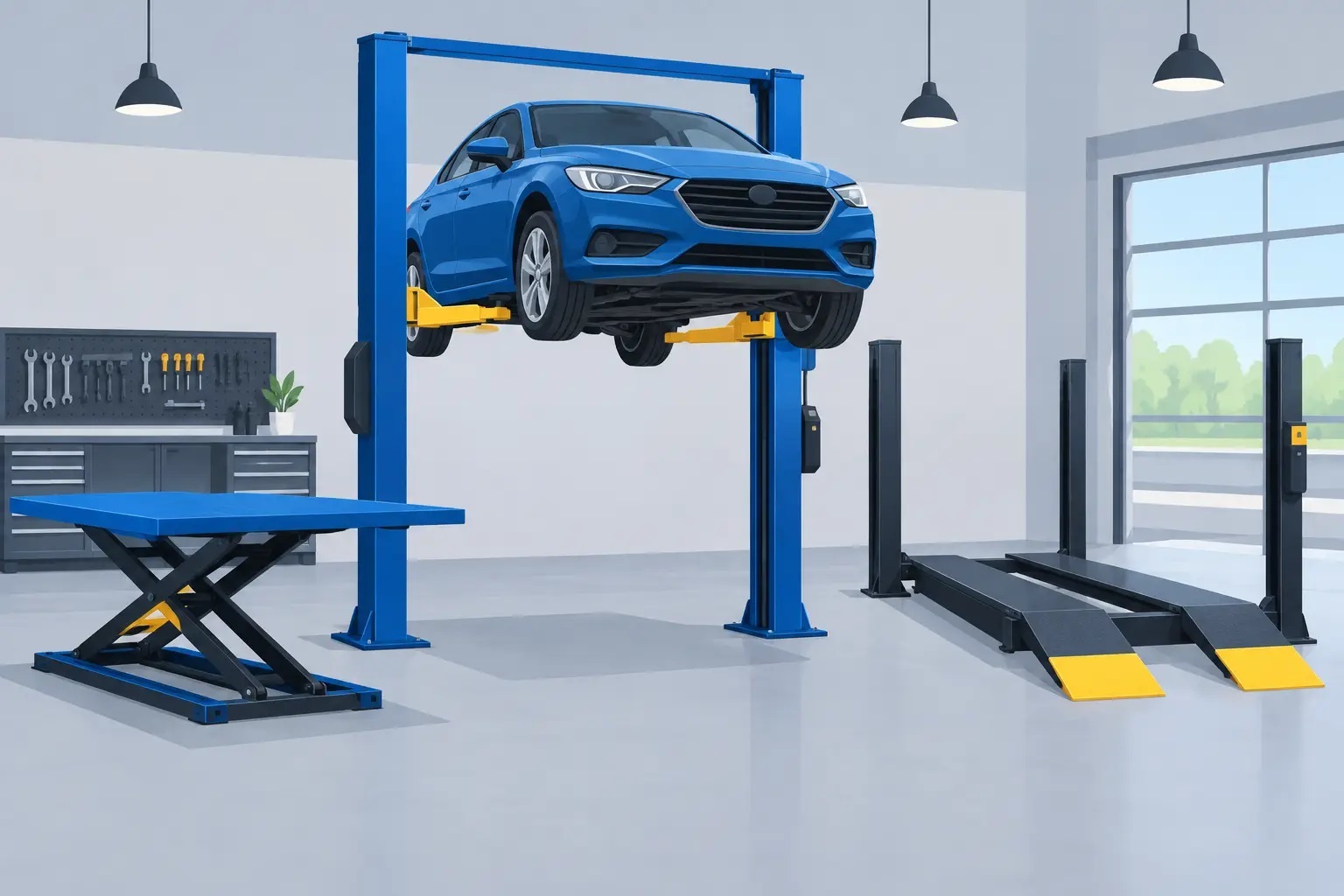
A lift that is too light for the work, too tall for the building, or wrong for the service mix becomes an expensive obstacle fast. The best vehicle hoists are not simply the highest-capacity models or the lowest-priced units. They are the lifts that fit the vehicles you see, the services you sell, and the concrete and ceiling conditions you already have.
For a busy repair shop, a vehicle hoist is a revenue-producing bay. For a home garage, it can turn routine maintenance from a floor-level job into safe, comfortable work. Either way, selection starts with the application, not the sale price.
Best Vehicle Hoists Start With the Job
The first decision is whether the lift will be used for general repair, wheel and tire work, alignments, storage, body repair, heavy trucks, or a combination of those jobs. A general repair shop may need several lift styles because no single design handles every service operation equally well.
Two-post lifts are the standard choice for mechanical repair. They provide open access to wheels, brakes, suspension, drivetrain components, and undercar service areas. Four-post lifts are often preferred for drive-on service, quick inspections, alignment work, and vehicle storage. Scissor lifts fit shops that need a compact footprint or a low-rise option for tires, brakes, and quick service. The right answer depends on how technicians need to approach the vehicle during the job.
A shop that performs mostly oil changes and inspections can work efficiently with drive-on runways. A shop performing engine, transmission, suspension, and exhaust work usually gets more value from a properly sized two-post lift. Tire-focused operations often combine low-rise or mid-rise scissor lifts with two-post bays, keeping vehicles moving without tying up a full-service stall.
Two-Post Hoists for General Repair
A two-post hoist supports the vehicle by designated lifting points, leaving the wheels and most of the undercarriage accessible. That makes it the workhorse for independent repair facilities, dealerships, fleet shops, and serious home technicians.
Symmetric models place the vehicle more evenly between the posts and commonly suit larger vehicles. Asymmetric models position the vehicle farther back and can make door access easier, especially on passenger cars. Many modern designs offer a combination of symmetric and asymmetric arm positions, but buyers should still confirm that arm reach, pad placement, and door clearance work with their actual vehicle mix.
Capacity matters, but it should not be viewed as a simple bigger-is-better number. A 9,000-pound or 10,000-pound lift covers a broad range of cars, pickups, SUVs, and light-duty vans. Shops working on heavy-duty pickups, commercial vans, utility bodies, or larger fleet vehicles should consider 12,000-, 15,000-, or higher-capacity equipment. Check the vehicle's actual gross weight, wheelbase, weight distribution, and lifting-point requirements, not just its curb weight.
Four-Post Hoists for Service and Storage
Four-post vehicle hoists are drive-on lifts. They are straightforward to load, stable for long-term storage, and well suited for operations where wheels need to stay supported on runways. They are popular with service facilities, collectors, and home garages needing to park one vehicle above another.
For repair use, look closely at runway width, runway length, approach ramp design, lifting height, and available rolling jack options. Rolling bridge jacks let the technician raise the wheels off the runways for brake, tire, and suspension service. Without them, a four-post lift is excellent for inspections, fluid service, and storage but less versatile for wheel-off repair.
Alignment-ready four-post lifts add another layer of requirements. They need the correct runway configuration, turn plates, slip plates, and compatible alignment equipment. An alignment bay is not a place to compromise on specifications. Small setup differences affect how efficiently the technician can perform alignments and how easily the equipment integrates with the rest of the shop.
Scissor Lifts Where Space Is Tight
Scissor lifts are useful when a full two-post or four-post layout does not fit the building plan. Low-rise scissor lifts are common in tire shops, detail operations, and home garages with limited ceiling height. Mid-rise and full-rise scissor lifts can support more serious repair work while keeping the bay floor relatively clear when the lift is lowered.
The trade-off is access. A scissor mechanism occupies space beneath the vehicle, so it may interfere with certain transmission, exhaust, or underbody jobs. Before buying, consider where technicians need to stand, where drain equipment will roll, and whether the lift structure blocks the components you regularly service.
Capacity Should Match Your Heaviest Routine Vehicle
Choose capacity based on the heaviest vehicles you expect to lift regularly, then leave room for real-world variation. A shop that occasionally sees a heavy pickup should not necessarily build its whole operation around 18,000-pound lifts. But if those vehicles are part of the weekly schedule, undersized bays create safety concerns and force technicians to move work elsewhere.
Pay attention to more than the nameplate rating. Long-wheelbase vehicles require adequate arm reach or runway length. Wide trucks may need more clearance between posts. Electric vehicles can have specific lift-point locations and battery-protection requirements. Cargo-loaded fleet vehicles may weigh far more than the same model in consumer trim.
For heavy-duty service, consider four-post, drive-on, mobile column, or specialty truck lifts with capacities ranging well beyond light-duty equipment. Some heavy-duty configurations reach 99,000 pounds. These systems require serious planning for bay dimensions, power, floor conditions, and vehicle flow, but they can keep fleet and commercial work in-house.
Building Conditions Can Decide the Lift Type
A hoist must fit the building as well as the vehicle. Ceiling height is one of the most common planning mistakes. A full-rise two-post lift needs enough vertical clearance for the lift structure, raised vehicle, and safe working room. Four-post storage lifts need additional height above the upper vehicle, not just enough room to raise it.
Low-ceiling lifts are available for buildings that cannot accommodate standard overhead configurations. They can be an excellent answer for an existing garage, though lower overall lifting height may affect technician comfort and vehicle clearance. Measure the finished ceiling, lights, sprinklers, fans, doors, trusses, and any other overhead obstructions before placing an order.
Concrete is equally important. Post lifts depend on a properly designed slab with sufficient thickness and strength. Manufacturer requirements vary by model, capacity, and anchoring system. Older buildings may have repaired slabs, embedded heating lines, post-tension cables, or unknown reinforcement. Do not assume a concrete floor is suitable because it looks thick enough. Confirm the lift manufacturer's installation requirements and have the site evaluated when conditions are unclear.
Electrical service also deserves early attention. Many lifts operate on 220-240V single-phase power, while larger commercial equipment may require three-phase power. Factor in disconnects, wiring runs, and electrician costs rather than treating them as last-minute details.
Safety Equipment Is Part of the Purchase
A vehicle hoist is only as safe as its design, installation, inspection, and daily use. Look for mechanical safety locks, reliable cable or chain systems where applicable, properly engineered arms or runways, and clear operating instructions. For commercial use, many buyers prioritize lifts certified to the applicable Automotive Lift Institute requirements.
Certification is valuable, but it does not replace correct installation or operator training. Technicians should know vehicle lifting points, load positioning, lock engagement, clearance checks, and the need to inspect adapters, cables, pads, anchors, and hydraulic components. A lift should never be used with damaged parts or bypassed safety devices.
Accessories matter here as well. Truck adapters, frame-contact pads, rolling jacks, drip trays, caster kits, air-line kits, and approach ramps can expand a lift's usefulness, but they must be compatible with the specific model. Buying the lift and accessories as a working system avoids fitment issues after delivery.
Price the Complete Installed System
The lowest lift price is not always the lowest project cost. Budget for freight, unloading, site preparation, electrical work, professional installation, accessories, and any permitting required in your area. A less expensive model that does not fit the bay or lacks needed jacks can cost more than a better-specified unit once changes are made.
For multi-bay projects, standardizing on compatible equipment can simplify training, parts stocking, and service procedures. It can also make it easier to configure the shop around workflow: quick-service bays near the entrance, general repair bays in the center, and alignment or heavy-duty work where vehicles can enter and exit without blocking other jobs.
MyToolEquipmentGuy.com has supplied automotive shop equipment since 1984, with lift options organized by style, capacity, vehicle application, and building constraints. That matters when the choice is not just between two models, but between a complete lift plan that needs to work for years.
Before you buy, write down the heaviest regular vehicle, the longest wheelbase, ceiling height, verified slab details, available power, and the jobs you expect the bay to produce. Those five details will narrow the field faster than a generic list of lift brands ever will - and they will put you much closer to a hoist that earns its floor space every day.
Recent Posts
-
Best Vehicle Hoists for Shops and Home Garages
Best Vehicle Hoists for Shops and Home Garages A lift that is too light for the work, too tall for …15th Oct 2026 -
How to Calibrate Alignment Systems in Your Shop
How to Calibrate Alignment Systems in Your Shop A modern aligner can show measurements to a hundred …13th Oct 2026 -
EV Servicing Equipment for Productive Shops
EV Servicing Equipment for Productive Shops A battery-electric vehicle may come in for the same tir …11th Oct 2026