
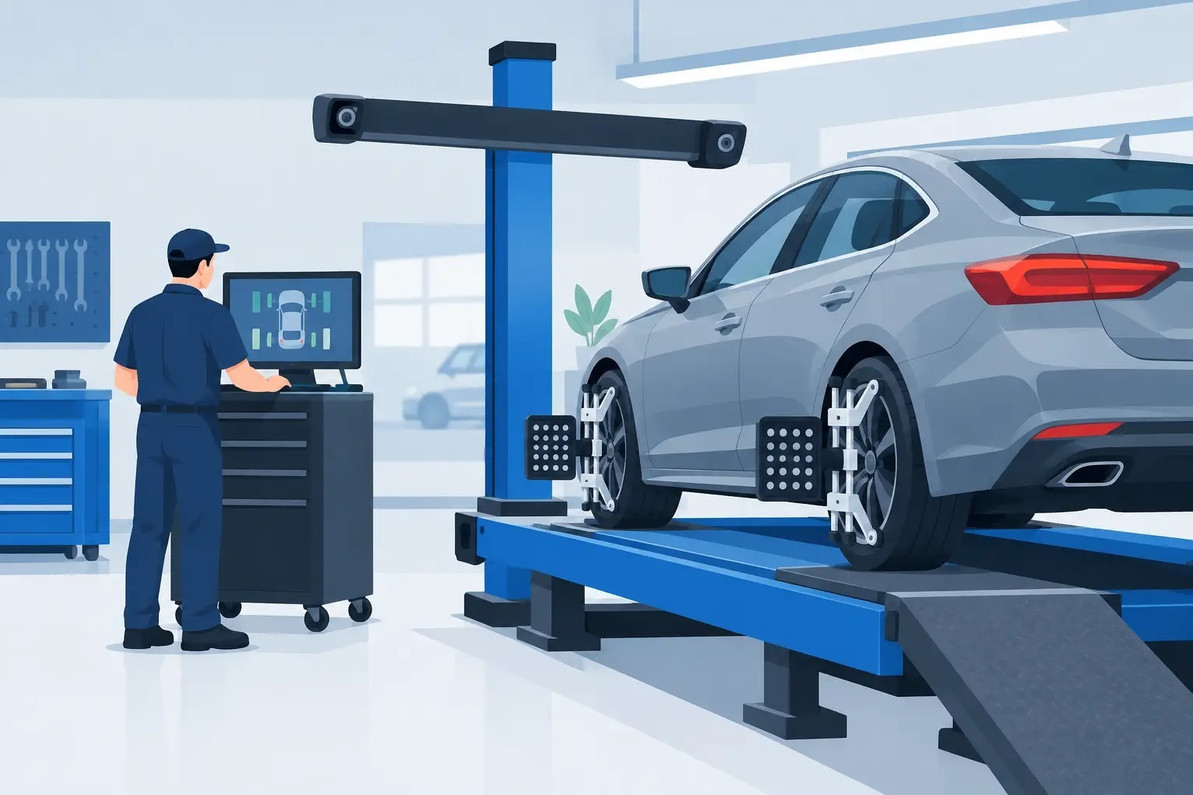
Wheel Alignment Equipment Guide for Busy Shops
Wheel Alignment Equipment Guide for Busy Shops
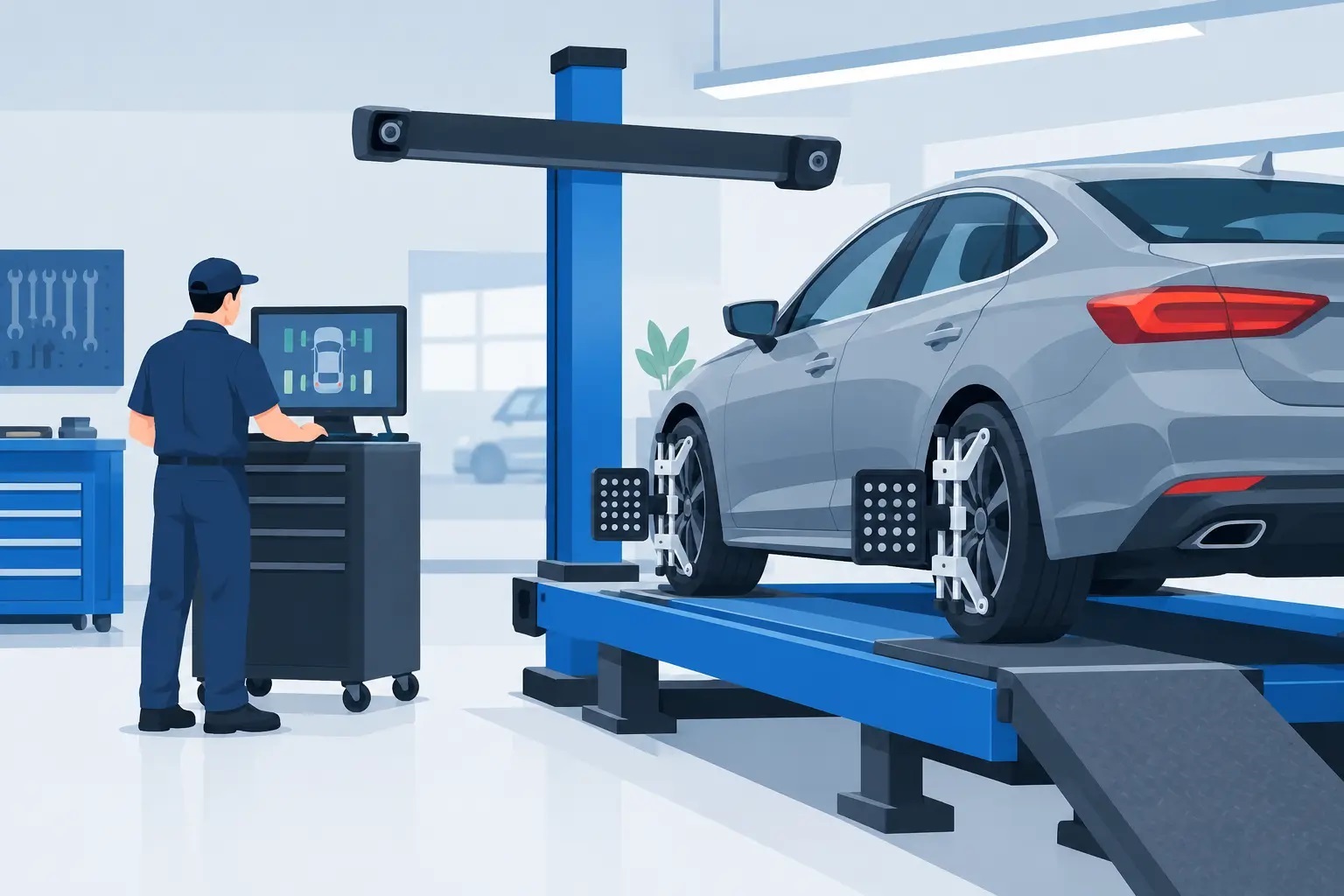
A wheel alignment system can either keep vehicles moving through the bays or turn a profitable service into a bottleneck. This wheel alignment equipment guide focuses on the equipment decisions that affect real shop throughput: the aligner technology, the lift or rack under the vehicle, the accessories at each wheel, and the support required to keep measurements accurate.
For most professional shops, the right answer is not simply the least expensive alignment machine. It is the system that fits the vehicles you service, the floor space you have, the technician workflow you want, and the number of alignments you need to sell each week.
Start With Your Vehicle Mix and Service Volume
Before comparing brands or screen sizes, look at the vehicles already coming through your doors. A general repair shop handling late-model passenger cars and light trucks has different needs than a tire store, dealership, collision center, or fleet operation. A shop that regularly sees long-wheelbase trucks, dually pickups, commercial vans, or lowered performance cars needs enough runway length, wheelbase coverage, and clearance to work without improvising.
Volume matters just as much. A shop performing a few alignments each week may prioritize a dependable, straightforward package with current vehicle specifications. A high-volume tire and service operation needs fast setup, clear technician prompts, quick compensation procedures, and a bay layout that prevents the alignment rack from becoming a parking space.
There is also a sales question. If your shop currently sends alignment work out, a properly specified system can bring that revenue in-house and support tire sales, suspension repairs, steering work, collision repairs, and ADAS-related services. But the equipment must be installed and used correctly. An alignment machine will not overcome worn tie rods, damaged wheels, uneven tire pressure, or a poorly maintained rack.
Choosing the Alignment Machine
Modern computer aligners generally use 3D imaging technology, cameras, wheel targets, and vehicle-specific specifications. The system measures wheel angles and guides the technician through the adjustment process. This is the standard setup for many professional shops because it is fast, visual, and capable of handling a wide range of current vehicles.
3D Camera Aligners
A 3D aligner uses cameras to read passive targets mounted at the wheels. Because the targets do not contain sensitive electronic measuring components, they are typically durable and practical in a busy environment. The cameras track target position as the vehicle is moved through the alignment procedure.
For most new equipment purchases, a 3D system is the sensible starting point. It supports efficient workflows, provides visual adjustment guidance, and generally gives technicians an easier path to repeatable results than older sensor-based systems. Screen layout, cabinet design, camera beam configuration, and software usability vary by manufacturer, so compare the working process rather than relying only on a feature list.
Clamp and Target Design
Wheel clamps see daily use, and they deserve close attention. A good clamp should attach securely without damaging the wheel, fit the wheel sizes your shop services, and allow technicians to work quickly. If you work on expensive custom wheels, low-profile tires, or specialty applications, ask specifically about rim-contact points and available accessories.
Targets need a protected storage location. Leaving them on the floor, stacked near a tire changer, or exposed to welding and body-shop debris shortens their service life. A cabinet or storage arrangement that keeps clamps, targets, steering wheel holders, brake pedal depressors, and hand tools organized saves time on every alignment.
Software Is Part of the Equipment
Alignment specifications are not static. New vehicle applications, revised procedures, and manufacturer data updates make software support a purchase-critical issue. Ask what database coverage is included, how updates are delivered, whether there are recurring software costs, and what technical support is available when a technician encounters an unfamiliar vehicle.
The best interface is not always the one with the largest monitor. It is the one your technicians can use without hunting through menus. Clear before-and-after printouts also matter. They help explain tire wear, suspension recommendations, and completed work to customers while documenting the alignment for fleet accounts and warranty records.
The Alignment Lift or Rack Is Not an Afterthought
The alignment machine is only one half of the purchase. Accurate wheel alignment requires a level, properly installed alignment lift or alignment rack with the correct wheel-contact surfaces. A standard four-post lift may be useful for inspections and general service, but it is not automatically ready for alignment work.
An alignment-ready four-post lift typically includes recessed slip plates at the rear and turn plates at the front. These allow the wheels to move as suspension angles are measured and adjusted. Without them, tire scrub and suspension bind can affect readings. The runways also need to be level and set up to the equipment manufacturer's requirements.
Scissor alignment lifts are another strong option where floor space, drive-through access, or a lower-profile installation is important. They can provide a clean, efficient working area, but capacity, runway length, approach angle, and available undercar access should be matched to your vehicle mix. For truck and fleet work, heavy-duty alignment systems may require longer runways, higher capacities, and specialty adapters.
Turn Plates, Slip Plates, and Compensation
Turn plates support front-wheel movement during steering procedures. Rear slip plates allow the rear wheels to move without binding. These components must be maintained, clean, and correctly positioned. A rusted, dirty, or stuck plate can create technician frustration and questionable readings.
Compensation procedures are equally important. Runout compensation accounts for wheel and clamp mounting variation. Many modern 3D systems offer rolling compensation, which can reduce setup time compared with lifting the vehicle for a traditional procedure. Still, the process has to be performed according to the aligner's instructions. Faster is useful only when it remains accurate.
Plan the Bay Before Ordering
An alignment bay needs more than enough room to park the vehicle. Measure the full vehicle path, including approach area, lift length, door clearance, technician walkways, camera location, cabinet placement, and space for opening the hood. A system that fits on a layout drawing but leaves no room to walk around a crew-cab truck is not a productive installation.
Ceiling height matters when selecting a four-post alignment lift, especially if you plan to use an optional rolling jack, lighting, or overhead camera beam. Concrete requirements matter too. The slab must meet the lift manufacturer's specified thickness, strength, condition, and anchoring requirements. Do not assume an older floor is suitable because it has supported vehicles in the past.
Electrical service and network access should be planned early. The aligner cabinet, cameras, printer, and optional connected features may need dedicated power and reliable connectivity. In a collision center, also consider separation from welding, sanding dust, paint operations, and heavy traffic that could damage targets or camera components.
Buy for Serviceability, Not Just the Quoted Price
A lower initial price can lose its advantage quickly if the machine has limited vehicle coverage, difficult support, expensive update requirements, or unavailable replacement parts. Alignment equipment is a revenue-producing asset, and downtime costs more than the difference between two quotes when a busy shop cannot complete scheduled work.
Ask the equipment supplier about installation coordination, training options, warranty coverage, parts availability, calibration requirements, and who handles service in your area. For a new shop build, it also makes sense to coordinate the alignment package with tire changers, wheel balancers, air service, vehicle lifts, and diagnostic equipment before the bays are finalized.
Financing can be useful when alignment equipment is part of a larger expansion, but monthly payment should not replace capacity planning. Buy a system that can handle the vehicles you expect to service over the next several years, not only the easiest jobs on the schedule this month.
A Practical Wheel Alignment Equipment Checklist
Before placing an order, confirm these purchase details with your team and supplier:
- Vehicle types, wheelbase range, tire sizes, and maximum vehicle weight.
- Expected alignment volume and the number of technicians using the bay.
- Alignment lift style, runway length, turn plates, slip plates, and rolling jack needs.
- Available bay dimensions, ceiling clearance, concrete condition, power, and network access.
- Software update terms, training, warranty coverage, local service, and replacement-part support.
A complete package should make the technician's job easier from vehicle drive-on through final printout. That is why experienced equipment guidance matters. MyToolEquipmentGuy.com has served the industry since 1984 and can help match alignment equipment, lifts, and shop-support equipment to the work your facility actually performs.
The right system should not feel oversized, under-equipped, or difficult to maintain. It should let your team identify the problem, make the adjustment, document the result, and get the next vehicle into the bay with confidence.
Recent Posts
-

Wheel Alignment Equipment Guide for Busy Shops
Wheel Alignment Equipment Guide for Busy Shops A wheel alignment system can either keep vehicles m …25th Oct 2026 -
Electric Vehicle Lifts: What Shops Need to Know
Electric Vehicle Lifts: What Shops Need to Know An EV may look like a routine lift job until the te …21st Oct 2026 -
AMGO Hydraulics GLOBAL MANUFACTURER FOR AUTOMOTIVE LIFTS AND HYDRAULICS
AMGO HydraulicsGLOBAL MANUFACTURER FOR AUTOMOTIVE LIFTS AND HYDRAULICS AMGO Hydraulic Corporation h …20th Oct 2026